
Last updated November 16, 2026
 Whole-home duct cleaning
 Dryer vent cleaning
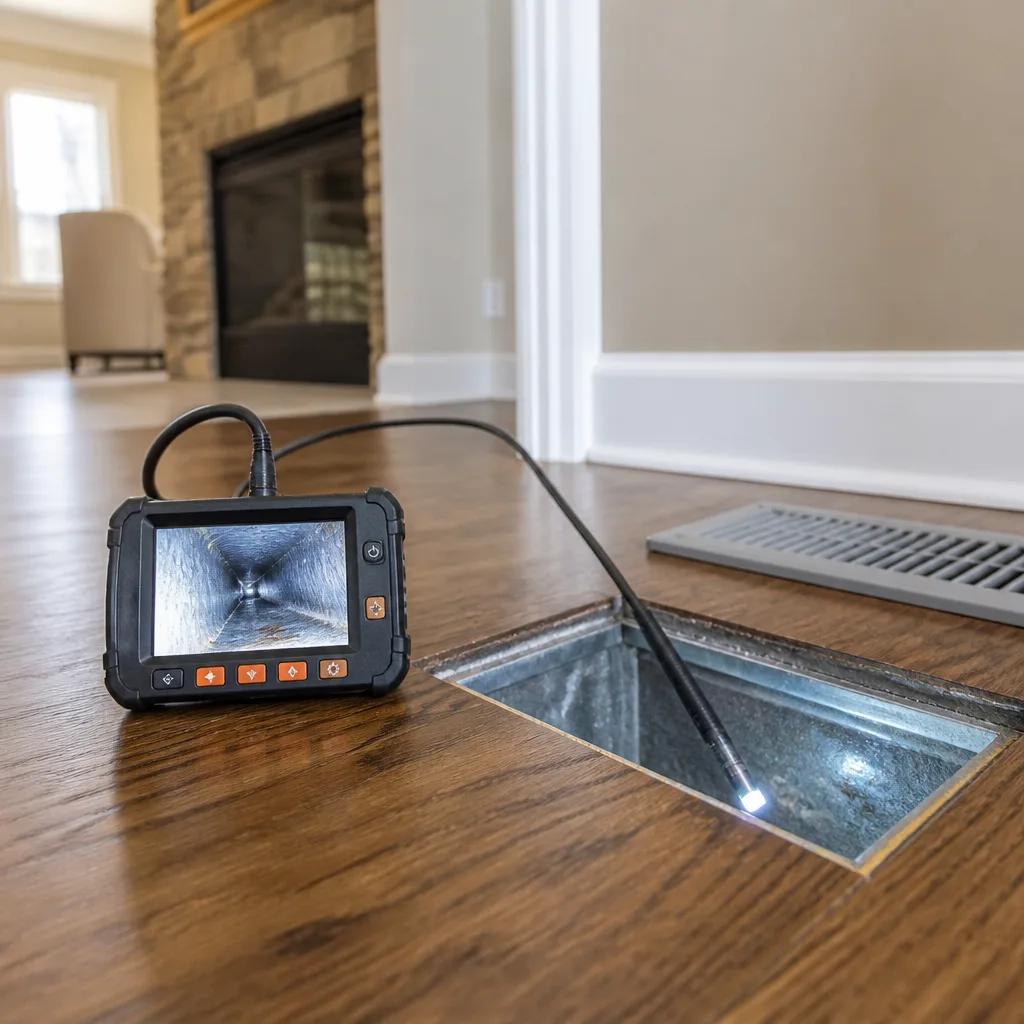 Camera inspection
 Sanitizing & deodorizing
Whole-system duct and dryer vent check with before-and-after photos - you see exactly what came out of your vents
That "$99 whole-house special" is a bait ad - the real number appears once they are in your hallway, or the "clean" is a shop-vac at the register. We photograph the inside of your ducts before and after instead.
Air Duct Cleaning Maintenance Checklist for Murfreesboro Homeowners
Most homeowners replace the air filter on schedule and figure the duct system behind it is taking care of itself. That’s backwards. Filter condition is a lagging indicator, not a leading one. By the time a filter looks gray and matted, the ductwork upstream has already been collecting dust, pet hair, and construction grit for months. A checklist changes that timing. It gives you a small set of things to look at, log, and act on so you catch filter failure, loose joints, and moisture problems while they’re still cheap to fix. This guide walks through what to check, how often, and where a homeowner’s job stops and a specialist’s begins, with notes specific to Murfreesboro homes.
Quick Answer
A good air duct maintenance routine for a Murfreesboro home combines four things: a filter check once a month, a visual and smell check at each register every few months, a look at the air handler cabinet twice a year, and a professional duct cleaning and inspection on a schedule based on how hard your HVAC system runs rather than a fixed number. Homeowners handle the first three. A duct specialist handles the fourth, plus any repair the inspection turns up.
Styles & brands we work with
- Whole-home duct cleaning
- Dryer vent cleaning
- Camera inspection
- Sanitizing & deodorizing
Table of Contents
- Why a Checklist Beats a Reminder
- Homeowner-Accessible Tasks
- Tasks That Require a Duct Specialist
- What to Look and Smell For at Each Register
- Tracking HVAC Runtime Hours in Murfreesboro
- Checking the Air Handler Cabinet
- Documenting Findings Over Time
- Common Mistakes to Avoid
Why a Checklist Beats a Reminder
A calendar reminder tells you to do something. A checklist tells you what to look for once you’re doing it. The difference matters because duct problems rarely announce themselves. A supply run that’s pulled loose at a collar behind a ceiling boot won’t trip a thermostat or throw a code. It just quietly dumps conditioned air into a wall cavity while the rest of the house works harder. A small moisture patch on a flex duct in a crawlspace won’t fog the windows. It just feeds dust into a sticky mat that you’ll notice six months later when the filter clogs twice as fast.
A structured checklist catches the small signals before they compound. Here’s the sequence we recommend for Murfreesboro homes:
- Monthly: air filter inspection, recorded on a simple log.
- Every two to three months: register grille check for dust pattern, discoloration, and odor.
- Twice a year: air handler cabinet walkaround, looking at drain pan, coil face, and blower wheel.
- Annually: review your log and decide whether the pattern you’re seeing points to needing a cleaning or a repair.
- Every three to five years, adjusted by runtime: professional duct cleaning and inspection.
That last interval is a starting point, not a rule. A Murfreesboro home near the Depot District with original 1950s sheet metal ductwork and a big shedding dog is on a very different schedule than a newer build off Veterans Parkway with sealed flex runs and one occupant. The checklist is how you find out which one you’re in.
If you’d rather not manage the document yourself, a specialist can run the inspection and hand you a written summary. At Laurel Air Duct we do that as part of every cleaning visit, so you’re not starting from zero each time.
Homeowner-Accessible Tasks
Some of the checklist is genuinely yours to do. These tasks don’t require tools beyond a flashlight, a screwdriver, and a phone camera, and they’re the ones that catch the earliest signals.
- Air filter check. Hold the filter up to a light source. If you can’t see through it, replace it. Note the date and the appearance in your log. In Murfreesboro’s long cooling season the filter often loads faster in summer than winter.
- Register grille visual. Remove the grille and look at the duct throat behind it with a flashlight. Log anything that catches your eye: dark streaks, fuzzy growth, fine grit, insect casings, or a musty smell when you lean in.
- Return grille check. Return grilles carry more volume than supplies, so they collect more. Look for matted dust on the grille face and any visible debris inside the return boot.
- Airflow test. Hold a tissue to each supply register and watch how it moves. A register with noticeably weaker flow than the others is worth flagging in your log even if you can’t explain it yet.
- Odor check. Walk through the house after the system has run for twenty minutes. Note any room that smells musty, dusty, or like a wet dog. Odor is one of the most reliable early clues that moisture is involved somewhere in the system.
- Condensate check. Look at the drain pan under the air handler, if it’s accessible. Standing water, slime, or a clogged drain line is a moisture problem that will eventually feed the ducts.
None of this requires touching a sealed duct run, opening a panel that holds live electrical components, or climbing into a crawlspace. Keep the checklist to what you can see safely and log what you find. That log is the most valuable thing you can hand a technician later.
Tasks That Require a Duct Specialist
The other half of the checklist belongs to a professional. Not because the tasks are secret, but because they need equipment most homeowners don’t own and access that isn’t safe to attempt without training. Duct interiors, especially behind tight bends and in trunk lines, can only be cleaned thoroughly with rotary-brush tooling and negative-air containment to hold what gets dislodged.
Here is what a full professional visit covers:
- Containment setup. A HEPA-filtered negative-air machine and containment seal the work area so dislodged debris is captured, not pushed into living space. We use Abatement Technologies containment equipment for this step.
- Rotary-brush cleaning. A flexible rotary brush driven by a Rotobrush system scrubs the duct walls from the inside. A shop-vac-style vacuum can’t reach the walls of a long run, and it can’t loosen the caked material that sticks to them.
- Trunk and branch cleaning. Supply and return trunks, branch runs, and boots get cleaned run by run, with the system’s airflow stopped during the work.
- Inspection for damage. While the system is open, we look for disconnected joints, crushed flex, torn liner, and sections that have pulled apart. This is where air duct repair becomes part of the visit rather than a second appointment.
- Register and grille cleaning. Grilles come off and get cleaned so the visible part matches the work done behind it.
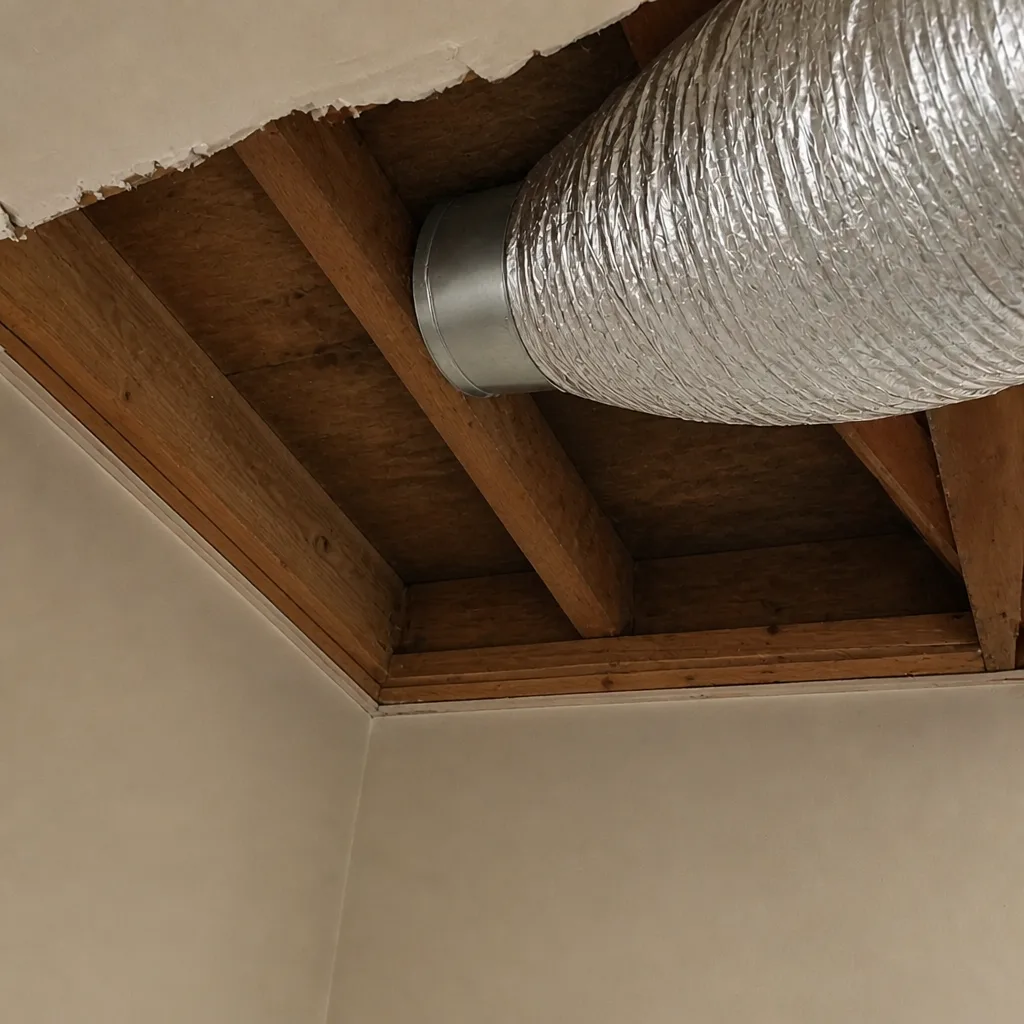
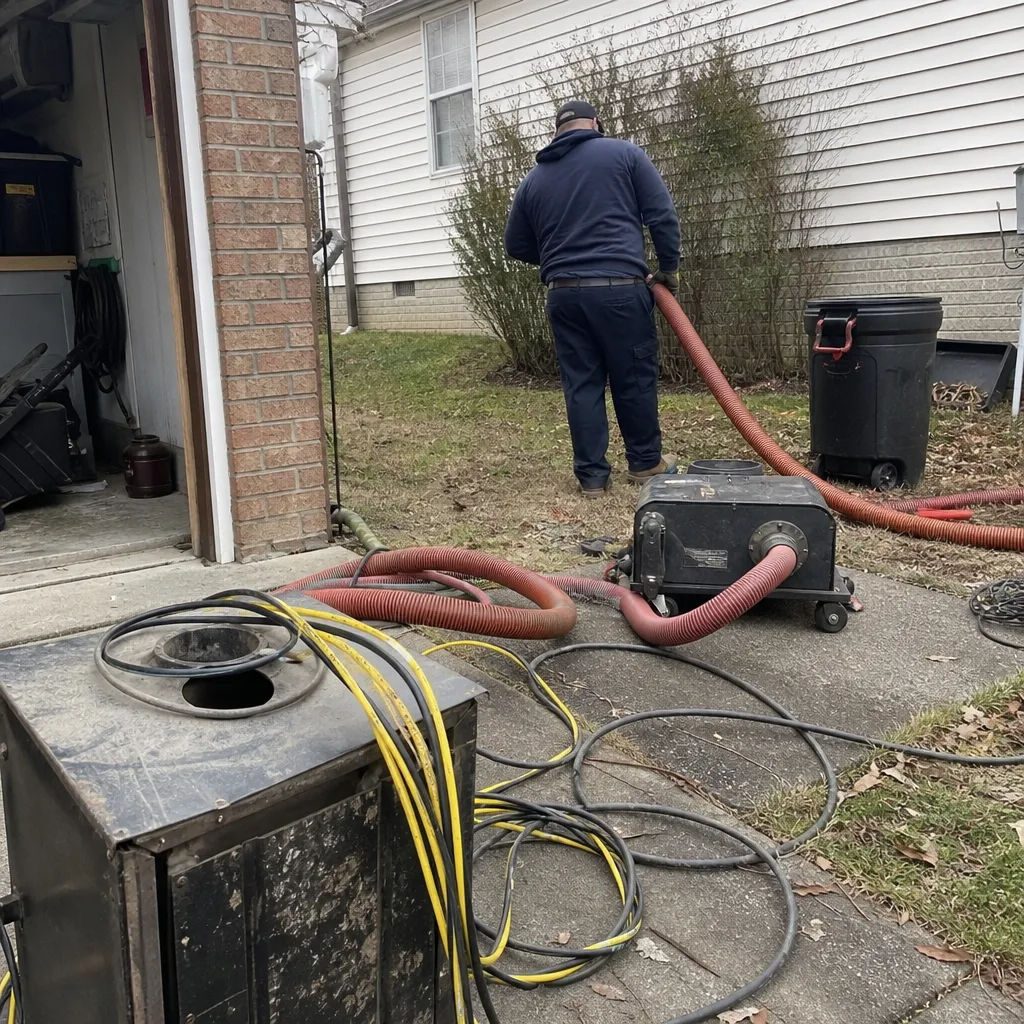
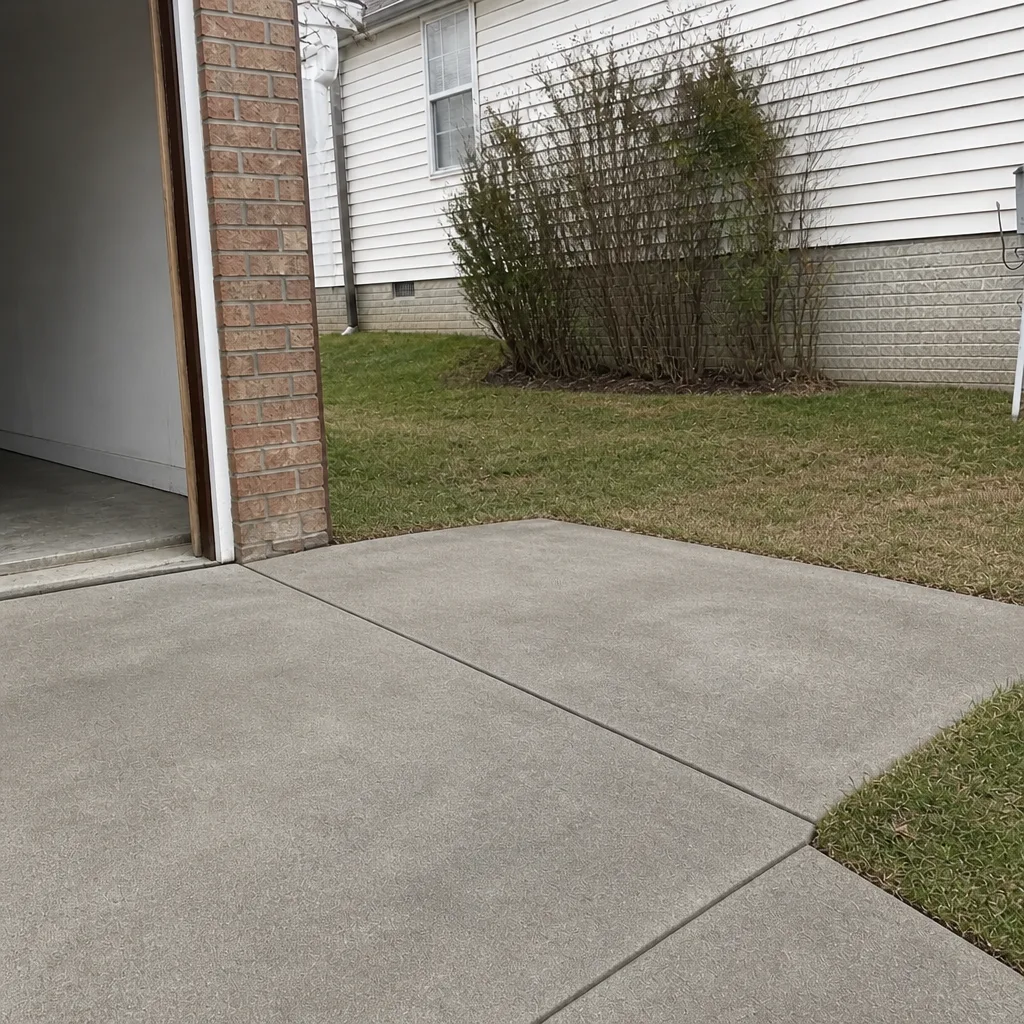
- Before-and-after documentation. Photos of your own ducts, taken before and after cleaning, so you can see what was done.
If you’re weighing a cleaning against a repair, it’s worth knowing the two often overlap. Cleaning alone can’t fix a disconnected duct, and repair without cleaning leaves debris in the system. We clean it, and if something is broken, we fix it. You can read more about our air duct cleaning process if you want the full scope in detail.
What to Look and Smell For at Each Register
The register grille is your best diagnostic point. It’s the one place in the system you can see into the ductwork without opening anything. What you record at each one helps a specialist tell the difference between ordinary dust, a moisture problem, and a pest issue before anyone pulls a brush through.
Use a phone camera with the flash on and take a photo of the duct throat at each register. Then match what you see to this list:
- Fine gray-brown dust, evenly distributed: ordinary household dust. Normal, and not a problem by itself.
- Dark, sticky, or greasy buildup: often an indicator of moisture or cooking aerosol. Worth flagging.
- White or pale green fuzz, or a spotty growth pattern: possible mold or mildew. Note it and get a specialist out to look.
- Black or brown specks or tiny pellets: possible pest activity. Look for droppings inside the boot.
- Visible nesting material or insect casings: a pest entry point somewhere upstream. Repair will be needed, not just cleaning.
- A musty or wet-dog odor: moisture is involved somewhere. Odor alone is a strong enough cue to call a specialist.
- Matted fuzz on the grille face: a sign that the duct is shedding liner material or that a filter is failing.
Try not to draw conclusions from a single register. Look at the whole set. If one room has a distinct smell or a different pattern from the rest, that’s the run to photograph first. In our experience the supply registers closest to the air handler show the earliest signals, because more airflow passes through them. That means a clean register across the house and a dirty one in the hall often points to a specific run, not a whole-system problem.
Tracking HVAC Runtime Hours in Murfreesboro
Most advice on duct cleaning says “every three to five years” and leaves it there. That’s a guess dressed up as a schedule. The better measure is how many hours your system actually runs. A duct system that moves 2,000 hours of air a year accumulates debris at a different rate than one that runs 800 hours. In Murfreesboro, the long cooling season tilts most homes toward the higher end.
You can track runtime roughly without special equipment:
- Note how many days per week your system runs in each season.
- Estimate the hours per day it cycles on. In Murfreesboro’s humid summer months, a typical home runs far more often than in the spring or fall.
- Multiply those out per season and add the total.
- Record the annual figure in your log. Compare year to year.
If you’re on a smart thermostat, it will usually report runtime hours for you. Check the app once a season and copy the number into your log. That’s the cleanest way to build the record.
Use the figure as your own baseline. A home running 2,500+ hours a year with shedding pets will need professional cleaning sooner than the standard interval. A tightly sealed newer home running under 1,000 hours might stretch further. The point isn’t to hit a magic number. It’s to stop guessing and let the data tell you. Schedule the cleaning based on what your log says, and ask a specialist to talk through the pattern with you. If you also have a gas dryer, keep the same runtime mindset for dryer vent cleaning, which needs its own check cycle based on loads of laundry rather than HVAC hours.
Checking the Air Handler Cabinet
The air handler cabinet is the component most homeowners never open and the one that tells the clearest story about your duct system. If the ducts are dirty, the air handler is usually dirtier. If there’s a moisture problem in the system, it shows up here first.
Look at three things when you check it:
- Drain pan. It should be dry or nearly dry, and the drain line should flow freely. Standing water, slime, or overflow means a moisture problem that needs attention. A wet pan feeds the whole system with humid air.
- Coil face. If it’s visible, look for dust matting and any biological growth on the coil fins. A dusty coil can’t transfer heat efficiently, and it also signals that the ducts upstream are shedding material onto it.
- Blower wheel. The blower wheel is the fan that moves air. If the blades look caked or fuzzy, the system is pulling dirt through the ducts at a rate that means the ducts need cleaning too. A caked wheel also throws material into the ducts downstream.
Some panels and service doors are safe for a homeowner to open, others hold live electrical components. If you don’t know the difference, don’t open it. A duct specialist can check those three points during the cleaning visit as part of the routine. If any of them show a problem, we can talk through whether it needs an HVAC contractor, a duct repair, or cleaning alone. Keeping the scope honest matters more to us than booking a job we can’t complete.
Documenting Findings Over Time
The single most useful thing you can build as a Murfreesboro homeowner is a written history of your duct system. Contractors who arrive at your door without one are working from zero. They can guess at your cleaning interval, your filter habits, and the seasonal patterns of your system, but they can’t know. A log solves that in a few minutes of work per check.
Keep it simple. A notebook or a file on your phone works fine, as long as you can hand it over. Record:
- Date of each check.
- Filter appearance and whether it was replaced.
- Photos of each register throat, taken with flash.
- Notes on any smell, discoloration, or pest signs.
- The HVAC runtime estimate for the season.
- Any service performed by a professional, with the date and a short summary.
- Any repair work, including which runs were repaired.
Hand that to the technician when they arrive. They’ll read the last few entries in a minute and can start the inspection with a working theory rather than a blank slate. “The supply register in the front bedroom has smelled musty since March” is a lead. “Nothing has ever been noted” is a dead end. In our experience, homes with a maintained log get more out of each visit because the specialist can focus on the flagged spots and verify the fix, instead of hunting through the system for clues.
Post-cleaning product choices benefit from the log too. If your records show recurring odor, a filtration or sealing option from Honeywell, Aprilaire, or Guardsman is worth discussing. If the log is clean and the system runs well, you may not need anything beyond cleaning.
Common Mistakes to Avoid
- Using filter appearance as your only gauge. A filter that still looks light can sit behind ductwork that’s already loaded with debris at the source. Check the register throats and the air handler along with the filter.
- Assuming a “whole house” cleaning covers the entire house. A cleaning that skips the trunk lines or the return boots is partial. Ask specifically what runs are being cleaned and how.
- Choosing a quote on price alone. A very low quote often means shop-vac-style equipment and no containment, which can redistribute dust back into the house. Ask what equipment and containment will be used before you book.
- Skipping the crawlspace in a Murfreesboro home. Many Murfreesboro neighborhoods have duct runs through unconditioned crawlspaces. Those runs see more humidity swings and are more likely to develop condensation and torn insulation, so they need to be part of the checklist, not an afterthought.
- Ignoring the dryer vent while you’re at it. If you’re logging duct checks anyway, put a dryer vent line in the same log. Clogged vents are a recognized fire hazard, and the U.S. Fire Administration links them to thousands of residential fires annually. It deserves its own cycle.
- Treating odor as cosmetic. A musty smell is the system telling you moisture is present. Cleaning may not fix it. Fixing it may need air duct repair.
- Not photographing anything. Without photos, nobody (including you) can tell if something has changed. A phone picture takes ten seconds and is the best evidence you’ll have next year.
See the difference
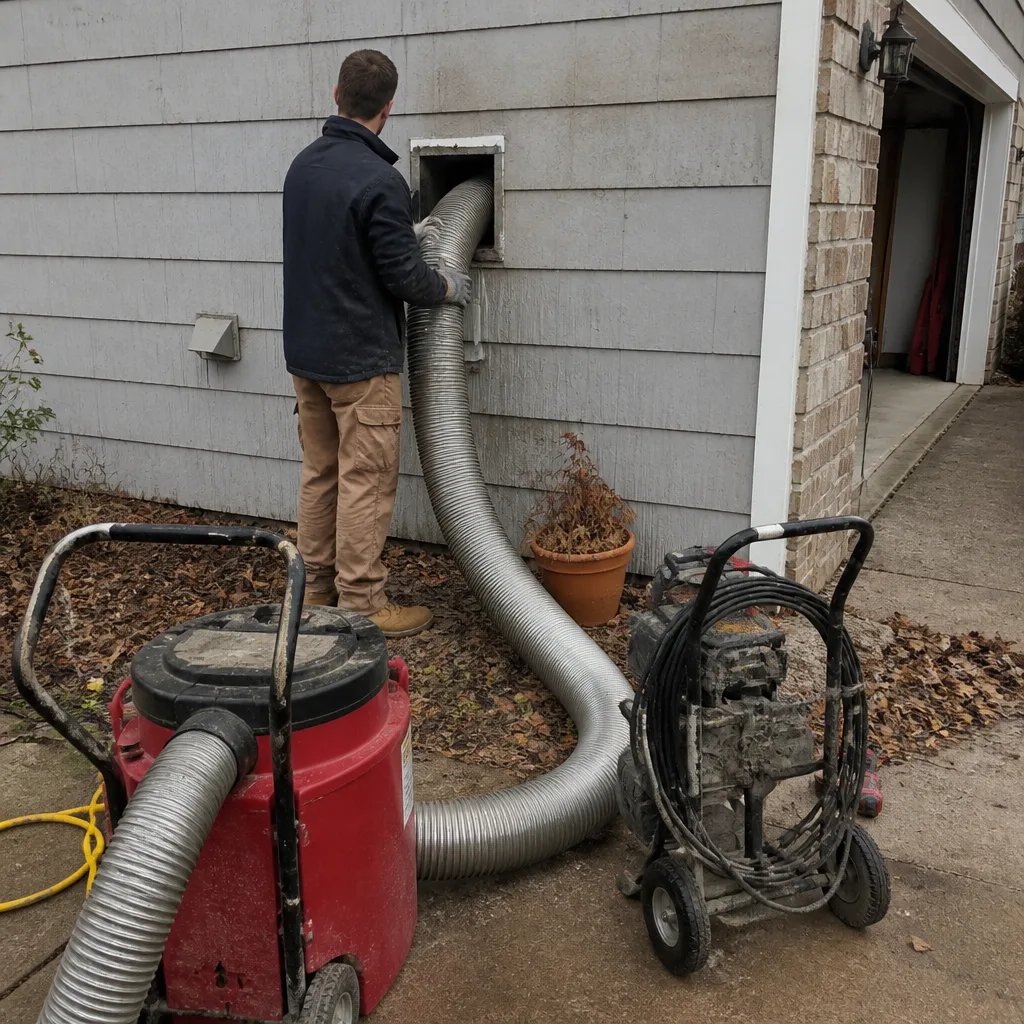 Before
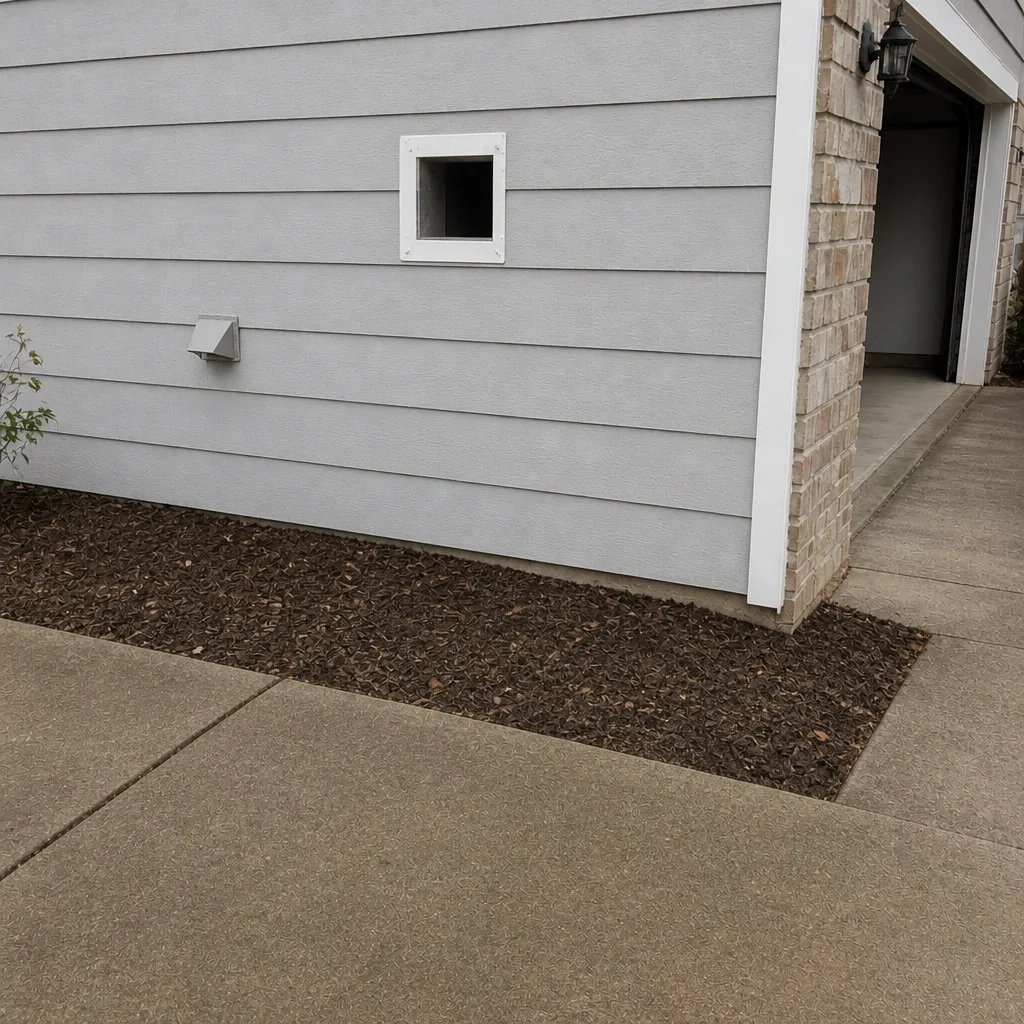 After
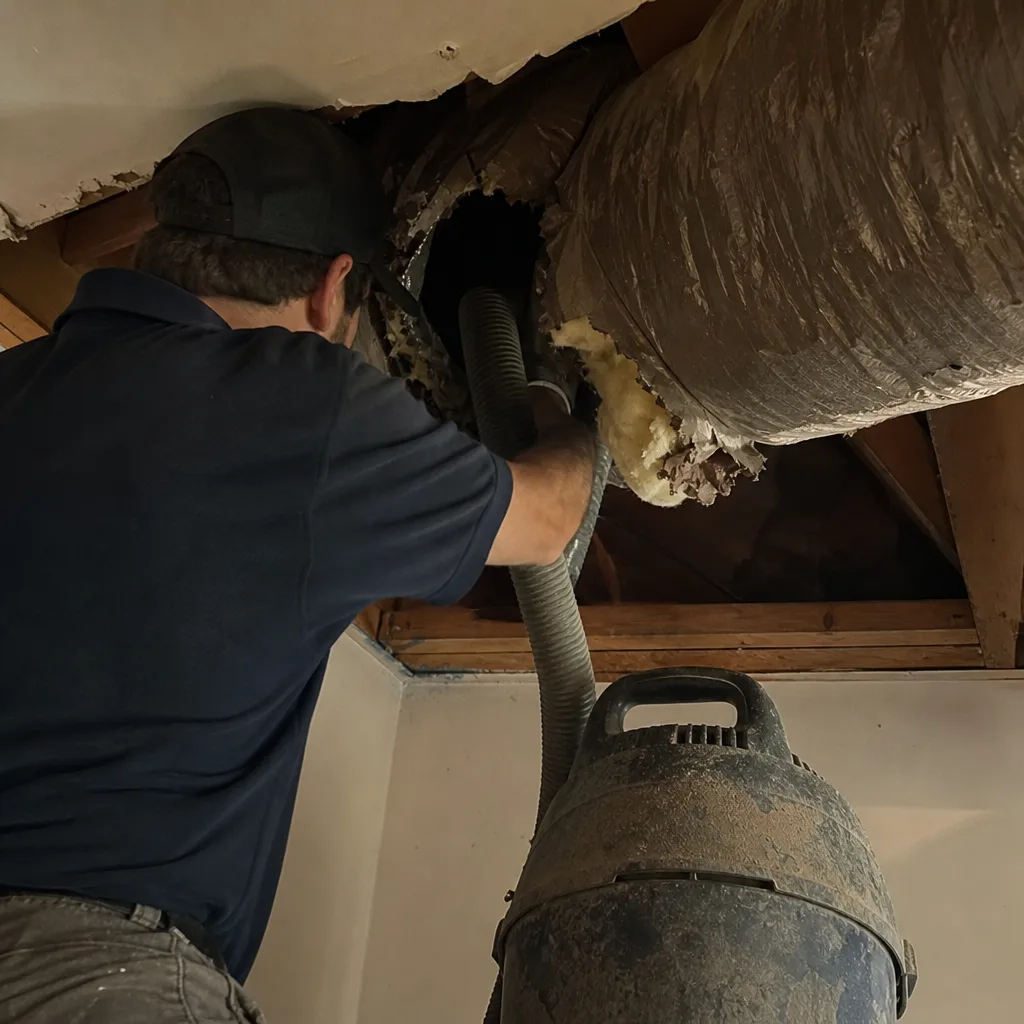 Before
 After
 Before
 After
When to Call a Professional
Call a specialist when the checklist turns up any of these: visible dark or fuzzy growth inside a register, a musty odor that persists after the filter is replaced, a crushed or disconnected duct section, an air handler cabinet with standing water or a caked blower wheel, or an annual runtime count that has climbed without explanation. Call sooner if a duct run has pulled loose in a crawlspace or attic, since a disconnection dumps conditioned air into an unconditioned space and forces the whole system to work harder.
You don’t need to know whether the answer is cleaning or repair before you call. A specialist can inspect and tell you. Laurel Air Duct offers free estimates in Murfreesboro. Call (888) 378-8438. We answer 24/7. Fast dispatch from 7am to 7pm, Sunday through Friday. The written estimate sets the price, and you get before-and-after photos of your own ducts so you know what was done.
Frequently Asked Questions
A typical Murfreesboro home needs professional duct cleaning every three to five years when the system runs a normal number of hours, and sooner if you have shedding pets, recent renovation dust, or a runtime count that climbs. Track your HVAC runtime hours in a log and let that number guide the interval rather than sticking to a fixed calendar. If your log shows recurring problems at specific registers, that’s a signal to schedule an inspection. Call (888) 378-8438 to talk through the timeline. Estimates are free.
A homeowner checklist catches visible and smellable signals at the registers, the filter, and the air handler cabinet. A professional inspection reaches inside the duct runs with rotary-brush equipment and HEPA containment, checks for disconnections and crushed sections, and includes before-and-after photos of your own ducts. The two work together. Your log makes the professional visit more useful because the specialist knows what to look at first.
No. A musty smell means moisture is involved somewhere in the system, but the cause could be a wet drain pan, a torn liner holding condensation, a crawlspace duct sweating, or biological growth inside a duct run. Each has a different fix, which is why a specialist should look before you book cleaning. Cleaning alone won’t solve a moisture problem if the source is a disconnected run or a wet pan. Call (888) 378-8438 for a free estimate.
No. A shop vacuum can’t reach the walls of a duct run, can’t loosen caked material, and can’t contain what it stirs up. Professional rotary-brush systems such as Rotobrush reach each run’s interior, and HEPA containment equipment from Abatement Technologies captures the debris so it isn’t pushed into living space. That containment step is the difference between cleaning and redistribution. If you have a duct cleaning estimate to compare, ask what equipment and containment the provider will use. Call (888) 378-8438 for ours.
Log the date, filter appearance, flash photos of each register throat, any smells or discoloration, your seasonal runtime estimate, and anything a professional has done. The point is to give the next technician a starting theory rather than a blank page. Photos matter most, because they show change over time that memory can’t track. Bring the log to your next cleaning visit and ask the technician to check the flagged spots first.
Yes. Laurel Air Duct handles air duct cleaning, dryer vent cleaning, and air duct repair as one specialist, so a checklist concern that turns up a disconnected run or a clogged vent doesn’t need a second provider. Dryer vent cleaning is a dedicated fire-safety service for us rather than an optional add-on. If you’re in Murfreesboro or a nearby community such as Nolensville, call (888) 378-8438 for a free estimate.
The Bottom Line
Air duct maintenance isn’t about remembering to book a cleaning. It’s about building a small record of what your system looks and smells like over time, then using that record to catch problems before they cost more to fix. Check the filter monthly, look inside each register every few months, walk the air handler twice a year, and track runtime hours through Murfreesboro’s long cooling season. Keep notes and photos. When the log starts showing a pattern, call in a specialist to inspect and clean with equipment that actually reaches the dust. Cleaning and repair, plus dryer vent safety, under one specialist. Free estimates. Call (888) 378-8438. We answer 24/7. Fast dispatch from 7am to 7pm, Sunday through Friday.
Written by the team at Laurel Air Duct.