
Last updated November 16, 2026
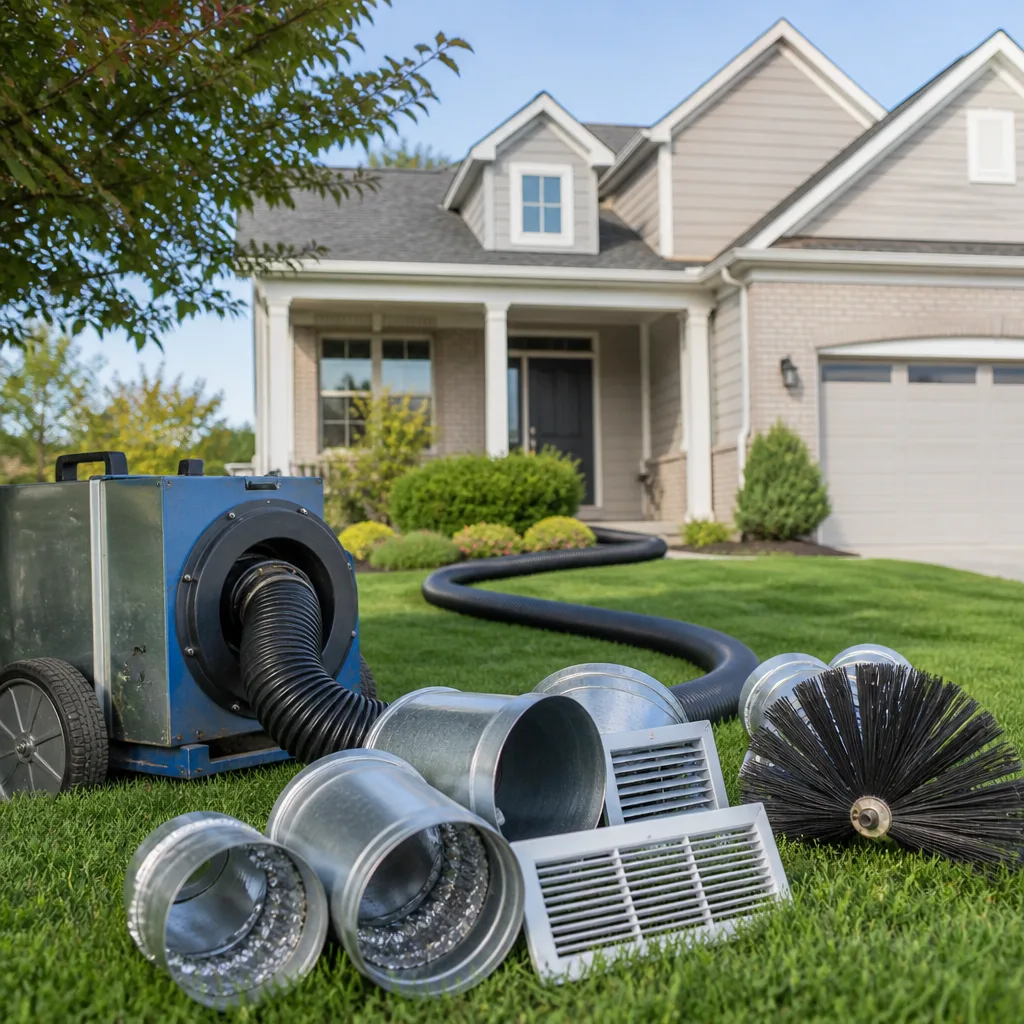 Whole-home duct cleaning
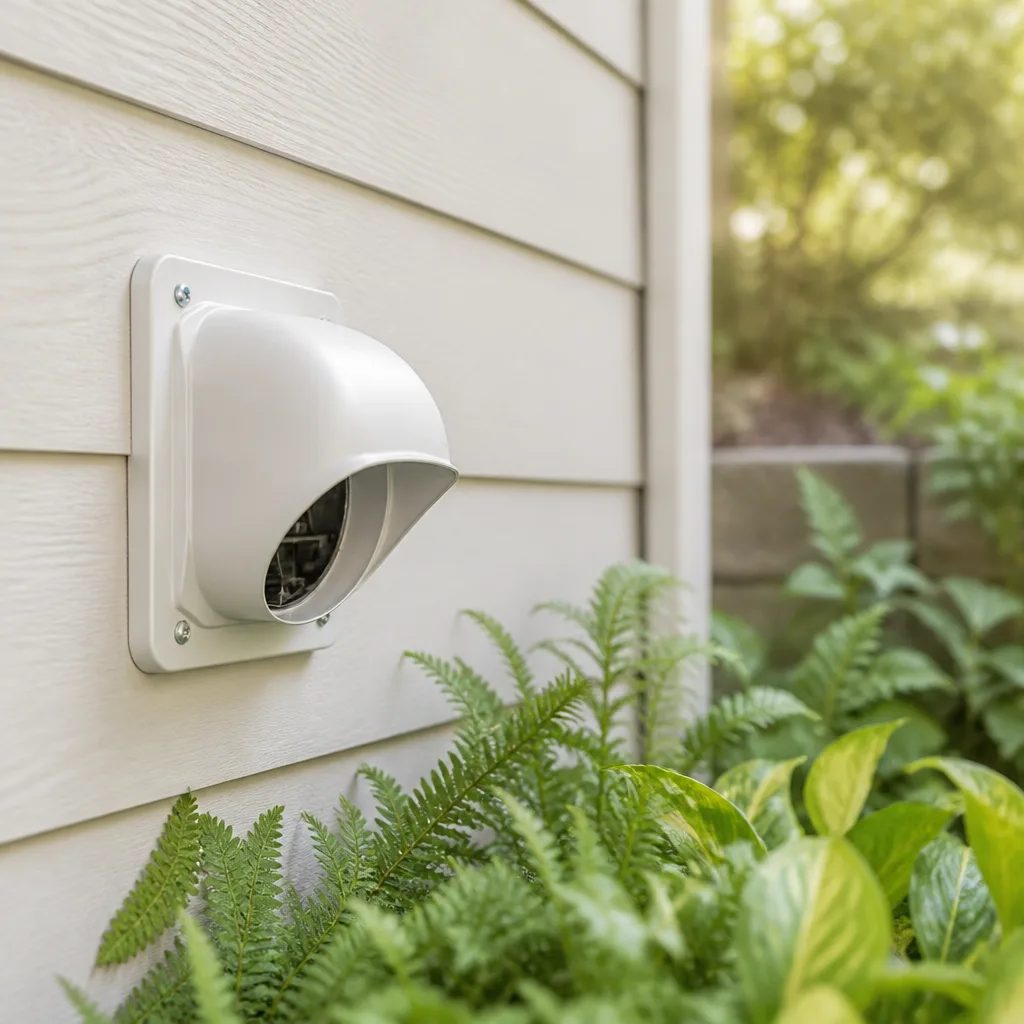 Dryer vent cleaning
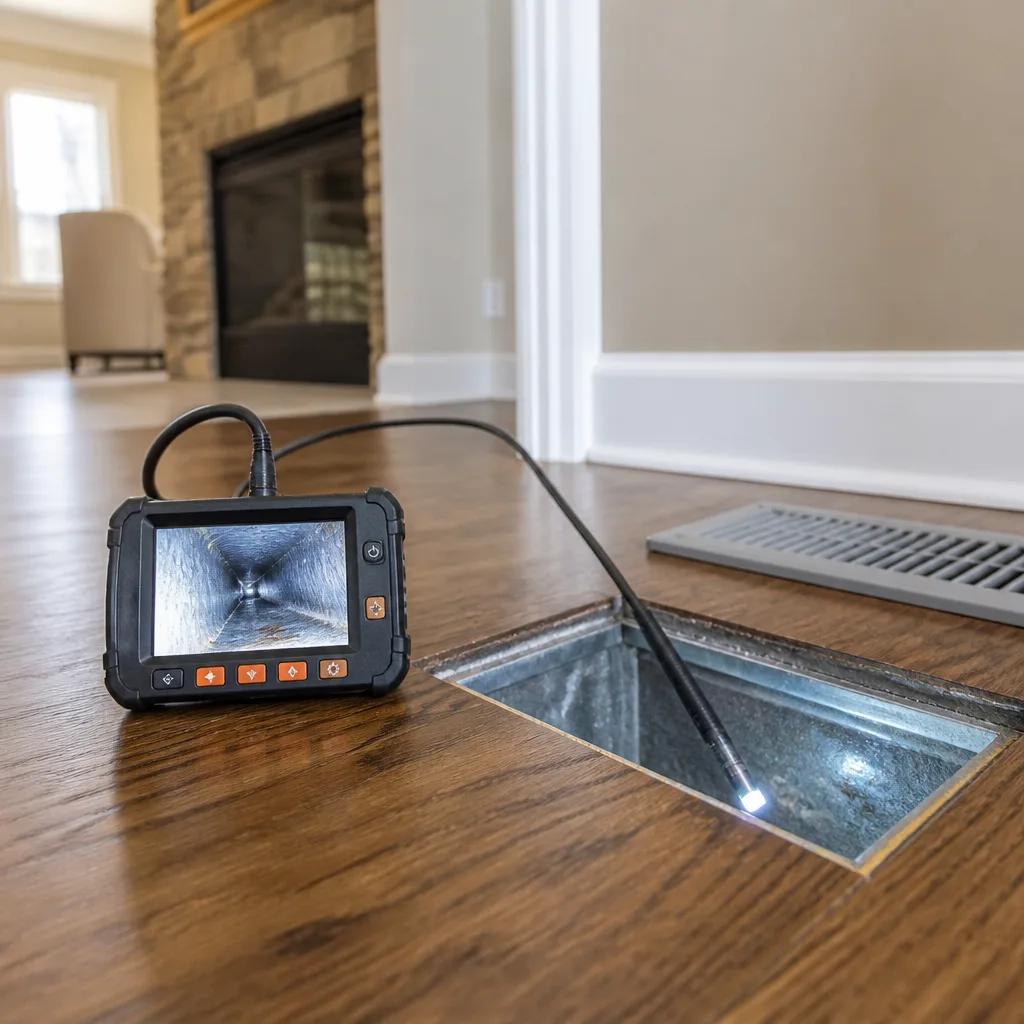 Camera inspection
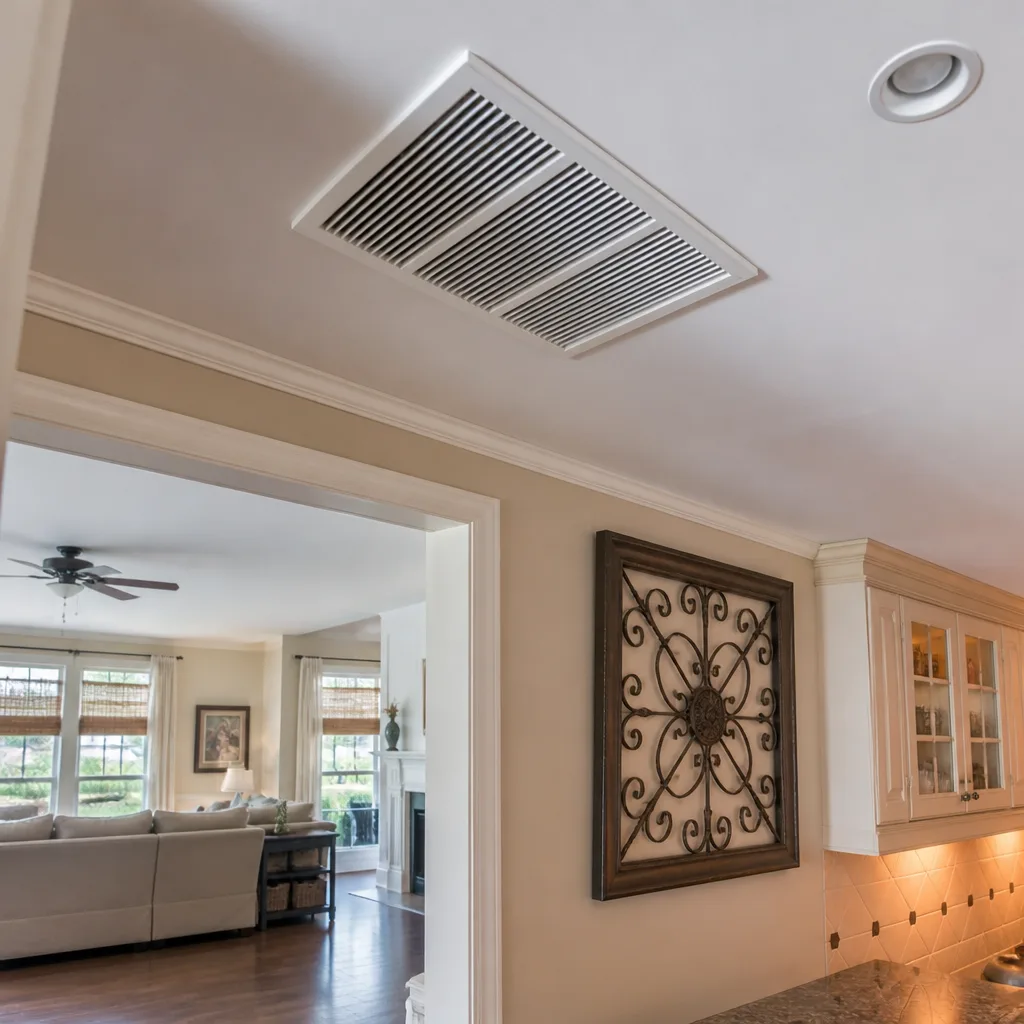 Sanitizing & deodorizing
Whole-system duct and dryer vent check with before-and-after photos - you see exactly what came out of your vents
That "$99 whole-house special" is a bait ad - the real number appears once they are in your hallway, or the "clean" is a shop-vac at the register. We photograph the inside of your ducts before and after instead.
Air Duct Cleaning Emergency Preparedness Guide for Murfreesboro Homes
After water gets into a Murfreesboro home, the duct system is usually the last thing anyone thinks about. Drywall gets cut out, flooring gets pulled, fans start running, and the ducts quietly sit there holding whatever the event left behind. Here’s the part most homeowners miss: not every storm, leak, or flood calls for professional duct work, and treating every event as a duct emergency costs as much as ignoring a real one. This guide walks through which post-event scenarios genuinely need a duct inspection within days, which can wait, how to tell contaminated water from clean water exposure, and what documentation to gather before you call anyone. Murfreesboro homeowners get specific local risk factors along the way.
Quick Answer
Duct inspection within 48 to 72 hours is warranted after flooding near the air handler, sewage backup, fire or smoke exposure, or construction and remediation work that generates debris. Clean-water intrusion that never reached the ductwork or air handler usually doesn’t require emergency attention, though it should still be checked once the home is dry. The distinction matters because the remediation path changes entirely depending on which one you’re dealing with, and a written scope of work with photos protects an insurance claim either way.
Styles & brands we work with
- Whole-home duct cleaning
- Dryer vent cleaning
- Camera inspection
- Sanitizing & deodorizing
Table of Contents
- Which Post-Event Scenarios Require Duct Inspection in 48 to 72 Hours
- Contaminated Water vs. Clean Water: Why the Distinction Changes Everything
- Murfreesboro-Specific Risk Factors Worth Knowing
- Documentation to Gather for Insurance Claims Involving Duct Systems
- The Right Sequence When Duct Cleaning Meets Broader Remediation
- What a Post-Event Duct Inspection Actually Involves
- Fire, Smoke, and Soot: Why Ducts Hold the Smell
- What Can Wait, and What Can’t
Which Post-Event Scenarios Require Duct Inspection in 48 to 72 Hours
The 48 to 72 hour window exists for one reason: mold and bacteria colonize wet organic material fast, and standing water sitting inside a duct run or around a plenum creates exactly the conditions they need. In Murfreesboro’s humid summers, that clock runs even faster than homeowners expect.
These are the scenarios that justify booking an inspection quickly:
- Flooding that reached the air handler or duct runs. If water pooled anywhere near the indoor unit, plenum, or supply boots, the system may have pulled moisture-laden air across wet surfaces for days. That’s a direct contamination path.
- Sewage backup. Sewage is category 3 water. Anything it touched, including ductwork in a flooded crawlspace or basement, has to be treated as contaminated and cannot simply be dried and left.
- Fire, smoke, or soot exposure. Smoke travels through ductwork the same way warm air does. Soot deposits settle on duct walls and continue releasing odor for months.
- Post-remediation construction. When remediation crews cut drywall, pull carpet, or tear out wet insulation, they generate fine debris. That debris gets pulled into return ducts and distributed through the home.
- Any event where the HVAC system ran during or after the water intrusion. A running system is a distribution engine. It moves moisture and contaminants throughout every connected room.
What surprises many Murfreesboro homeowners is how often a duct system draws in contamination without any water touching it directly. If the system cycled during a flood or remediation, it took the air from the wet space and moved it through the house. That’s a legitimate reason to inspect even when the ducts stayed dry.
Outside these five scenarios, an inspection can usually be scheduled once the home is stabilized. A storm that knocked out power, a roof leak that stayed in an attic corner, or a slow pipe drip that got caught early rarely justify emergency-level urgency for the ducts themselves, though the system should still get a look before you close the file on the event.
Contaminated Water vs. Clean Water: Why the Distinction Changes Everything
The word “flood” gets used for everything from a burst supply line to a river overtopping its banks, and the remediation path for each is completely different. Insurance adjusters and remediation contractors split water damage into categories, and the ducts follow the same logic.
Here’s a plain comparison homeowners can use to frame what happened:
- Clean water (category 1): A supply line, a toilet tank, a rain intrusion through a window. The water itself isn’t contaminated, but it still does damage. Ducts that got wet from clean water need thorough drying and inspection, but the cleaning path is more straightforward.
- Grey water (category 2): Washing machine discharge, dishwasher overflow, or clean water that sat for several days and grew organisms. Contamination risk is real and ductwork exposure warrants professional assessment.
- Black water (category 3): Sewage backup, river or groundwater flooding, or anything that came from outside the home’s plumbing. Highly contaminated. Ductwork exposed to black water is treated as a contaminated material, and in many cases sections are removed rather than cleaned.
The practical rule: if water came from outside the home’s plumbing system, assume contamination until a professional confirms otherwise. In Murfreesboro, that covers groundwater intrusion in crawlspaces, storm water pushed through HVAC penetrations, and river flooding near the Stones River. All of those push water that carries whatever it picked up along the way.
Here’s the part that catches homeowners: HVAC ductwork is often constructed of galvanized metal or flex duct with a fiberglass inner liner. That liner is porous. When it absorbs contaminated water, cleaning alone usually can’t restore it, and the contaminated section has to be removed and replaced. A professional assessment identifies which runs can be cleaned and which need replacement, and that answer directly affects the scope you submit to an insurer. When a system can be cleaned rather than replaced, that’s where professional-grade equipment earns its keep – a Laurel Air Duct assessment evaluates exactly which sections qualify. Abatement Technologies containment and HEPA filtration keep contaminants from being redistributed into the home during that work, which is the whole point when the source was black water.
Murfreesboro-Specific Risk Factors Worth Knowing
Murfreesboro sits in a part of Tennessee where spring storms can dump several inches of rain in a few hours, and the city’s terrain sends that water in predictable directions. Understanding where it goes helps you anticipate which parts of a home’s duct system face the highest exposure.
The areas closest to the Stones River and its tributaries are the ones that flood first and drain last. Homes in those zones tend to see water reach crawlspaces more often than homeowners expect, especially during prolonged rain events. Crawlspace duct systems in these areas are directly at risk for groundwater intrusion – water rises in the crawl, contacts the duct runs, and wicks into insulation and flex liner.
Three local patterns are worth flagging:
- Crawlspace duct systems. Common in older Murfreesboro neighborhoods, these put the entire duct run only inches from rising groundwater. Any crawlspace flooding event should trigger a duct inspection as a rule.
- Storm water through HVAC penetrations. Where the refrigerant lines and condensate drain exit the house, wind-driven rain can find its way in. During a heavy storm this can send water directly to the air handler and the duct boots feeding it.
- Attic systems in newer construction. Murfreesboro’s newer subdivisions often place air handlers and ductwork in unconditioned attics. When a roof or gable leak happens during a storm, the ducts are the first thing soaked.
The humid subtropical climate amplifies every one of these. A wet duct run that might dry slowly in a dry climate sits wet here for days, and mold can establish itself in that window. That’s the reason the 48 to 72 hour guidance applies so strictly in Murfreesboro, and why a post-event inspection should happen before you assume the ducts are fine.
Documentation to Gather for Insurance Claims Involving Duct Systems
Insurers pay for what’s documented, not for what’s remembered. If an event affected the duct system, the file you assemble in the first few days determines how much of the work gets covered.
Here’s a numbered sequence for gathering what you need:
- Photograph everything before cleanup begins. Water lines on ductwork, wet insulation, visible soot deposits, water standing anywhere near the air handler. Take wide shots and close-ups.
- Capture moisture readings if a remediation contractor is on site. Ask for the meter readings on ductwork, subfloor, and framing. These are the objective evidence that the ducts were exposed.
- Save the contractor’s written scope of work. The scope should list which duct runs were affected, whether they’re recommended for cleaning or replacement, and why. A duct system investigation is a proper scope item.
- Keep the HVAC inspection report. If the air handler or blower was affected, get that documented separately.
- Log the timeline. Date of the event, date water was discovered, dates of any remediation work. Insurers cross-check timelines against weather records.
- Request a written estimate from the duct specialist. Cleaning, replacement, and repair items should be broken out separately so an adjuster can see the scope clearly.
One thing worth doing early: call the insurer before the duct specialist arrives, not after. Most policies distinguish between water damage remediation (often covered) and ongoing maintenance (usually not). Getting the claim opened with the right framing from the start avoids the reimbursement shuffle later.
Documentation also protects you from a bad outcome downstream. If the ducts get cleaned but the underlying issue is never identified, or if contaminated ductwork gets dried and left in place, the problem returns. Photos, moisture readings, and a written scope are the paper trail that shows what was done and why.
The Right Sequence When Duct Cleaning Meets Broader Remediation
Duct cleaning after a flood isn’t step one. It rarely even comes second. Order of operations matters more than most homeowners realize, because cleaning ducts while the home is still wet or while contamination is still being removed wastes the effort.
Here’s the sequence that produces a durable result:
- Stop the water source. Obviously first. If there’s an active leak, the only work that matters is stopping it.
- Structure drying and demolition. Wet drywall, insulation, and flooring come out. Extraction and drying equipment runs until materials register dry. This can take days, especially in Murfreesboro’s humid months.
- Structural repair and reconstruction. Framing, subfloor, drywall. Any construction dust generated here will end up in the duct system if it’s running, so keep the HVAC off during heavy dust work or add temporary filtration.
- Duct cleaning and repair. Only once the environment is dry and construction dust has settled. Cleaning earlier means the ducts get fouled again by the next stage.
- Post-cleaning filtration and sealing. Fresh filters, correct sizing, and any sealing product recommended for the specific system. Products from Aprilaire or Guardsman address filtration and system integrity at this stage.
- Verification and documentation. Before-and-after photos, moisture readings, and a final walkthrough with the homeowner.
Where this goes wrong: homeowners get a duct cleaning quote first, book it immediately, and then find out the remediation crew is still working for another week. The ducts get cleaned, then get filled with construction dust, and someone has to pay to clean them again. That’s an avoidable cost.
Our approach is to schedule duct cleaning for after the drying and reconstruction stages, not in parallel with them. The cleaning is only as durable as the conditions around it. When reconstruction is finished and the home is dry, cleaning the system produces a result that holds. When it’s done early, it’s a redo. If a system spans both cleaning and repair work, our position is simple: we clean it, and if it’s broken, we fix it. Rotobrush rotary-brush systems and Nikro cleaning units handle the cleaning side; a breach, disconnection, or collapsed section gets identified and fixed rather than left in place because the cleaning crew only cleans.
What a Post-Event Duct Inspection Actually Involves
A real inspection is not a visual peek through a register with a flashlight. It’s a documented assessment of the whole system, and knowing what it should include helps homeowners compare what different providers offer.
Here’s what we look at during a post-event assessment:
- Air handler and plenum condition. Rust, standing water, wet insulation, and evidence of moisture migration into the cabinet. The plenum is often where early problems show.
- Duct run routing through the home. Which runs pass through flooded crawlspaces, wet attics, or below grade. Each gets assessed separately because each has been exposed differently.
- Interior duct surface condition. Done with a camera where accessible. Liner degradation, visible mold, and settled debris all get noted.
- Seal integrity. Breaches, disconnected joints, and collapsed sections. These matter for two reasons: they let contamination into the system, and they let conditioned air leak out. A cleaning job that ignores them is incomplete.
- Return and supply boots. Where ducts meet registers, water and debris collect. Boots are also where the vent-to-duct seal most often fails.
- Filtration setup. Filter MERV rating and fit at the air handler. An undersized filter or a poorly fitting one lets contamination through continuously.
The inspection produces a written scope of recommended work. If the answer is “the ducts are fine, just change the filter,” that’s what the report says. If there’s a contaminated run, a disconnected section, or a damaged liner, each one gets listed with a separate recommendation. Free estimates mean you can get this assessment done without committing to any work, and a good report tells you what can wait and what can’t. Homeowners in nearby areas can also access air duct cleaning through our Nolensville service layer if they’d rather not wait for a Murfreesboro appointment.
Fire, Smoke, and Soot: Why Ducts Hold the Smell
If a fire happened anywhere in a home, the ducts took in smoke, and the smell will keep coming back until the soot is dealt with. That’s not speculation; it’s how soot works. The fine particles settle on duct walls, and every time the system runs, some of them get stirred up and recirculated.
Smoke damage in Murfreesboro has a couple of sources worth thinking about:
- House fires, direct exposure. Even a fire contained to one room pulls smoke through the return air side of the system, distributing soot throughout the duct network.
- Wildfire smoke events during dry summers. The system runs continuously with windows closed and filters full of smoke particles. Longer-term duct contamination builds up quietly.
- Kitchen grease fires. Less obvious, but grease-contaminated air can travel through a return duct and leave residue on surfaces. That residue collects dust and stays pungent.
The cleaning approach for smoke differs from standard duct cleaning. The goal is removal, not neutralization – covering soot with a spray doesn’t solve the problem. Rotary-brush agitation breaks the deposits loose, negative-air containment captures them rather than redistributing, and HEPA filtration at the unit exhaust ensures anything the system picked up doesn’t leave the containment zone. That’s the standard our equipment meets, and it’s the reason consumer-grade vacuums aren’t in the conversation for fire-related duct work.
One thing to know: fire and smoke damage often results in duct replacement rather than cleaning. Soot bonds to flex liner in ways brushing alone won’t fix. A proper assessment tells you which runs can be restored and which need to come out, and insurance generally covers the difference when the cause is a fire event.
What Can Wait, and What Can’t
Part of emergency preparedness is knowing which calls matter and which don’t. Not every duct-adjacent event needs immediate action, and paying for emergency work you don’t need is as bad as skipping work you do.
What can usually wait a few weeks:
- General dust buildup in a duct system that hasn’t had a cleaning in years.
- A round of general cleaning without any triggering event behind it.
- Dryer vent cleaning on a home where the vent hasn’t been done recently but the dryer is running normally. That said, it can’t wait indefinitely – the U.S. Fire Administration links clogged vents to thousands of residential fires annually, and a vent that’s never been cleaned is a fire risk worth addressing before it causes a problem. dryer vent cleaning through our Nolensville service area is scheduled the same way.
- Air quality product installs like a fresh filtration system.
What can’t wait:
- Any ductwork exposed to black water.
- Duct systems that ran during a fire event.
- Water intrusion that reached the air handler.
- Duct contamination discovered alongside child or elderly health concerns in the home.
- Any event where the duct system carried moist air across wet surfaces for days.
Murfreesboro homeowners near the Stones River flood zone should treat any crawlspace water event as a same-week call. For those of you in the neighborhoods around the city’s newer subdivisions, an attic air handler leak during storm season gets the same treatment. If you’re unsure which side of the line your situation falls on, a phone conversation and a quick assessment answer the question before you spend anything. Dryer vent work in Nolensville is handled on the same schedule and the same standard as Murfreesboro work.
Common Mistakes to Avoid
- Cleaning before drying. Getting ducts cleaned while the home is still wet or actively being remediated wastes the money. Ducts get recontaminated by the next stage of construction.
- Assuming flood = duct replacement (or cleaning) without an assessment. The answer depends on which ducts were exposed and whether the material is porous. Guessing wrong in either direction costs money.
- Running the HVAC during remediation. A running system during drywall demo or carpet removal pulls construction dust into every duct run. Turn it off or add temporary filtration.
- Skipping photos before cleanup starts. Insurers pay for documented damage. If there’s no photo of the water line on the ductwork, it’s harder to argue for coverage later.
- Trusting a “free duct cleaning” offer bundled with the remediation. Discount cleaning is usually a shop-vac pass through one or two registers. The scope rarely covers the whole system, and it’s often the only part of the job that gets skipped once the remediation crew is gone.
- Ignoring dryer vent maintenance because the dryer still runs. Clogged vents can cause residential fires, and the Murfreesboro housing stock includes plenty of homes with original vent systems. It’s worth treating as a separate safety item, not an afterthought.
- Scheduling cleaning before repair. If ductwork has a breach or a disconnected joint, cleaning first just lets contamination flow back in. Repair belongs in the scope alongside cleaning, not as a later surprise.
See the difference
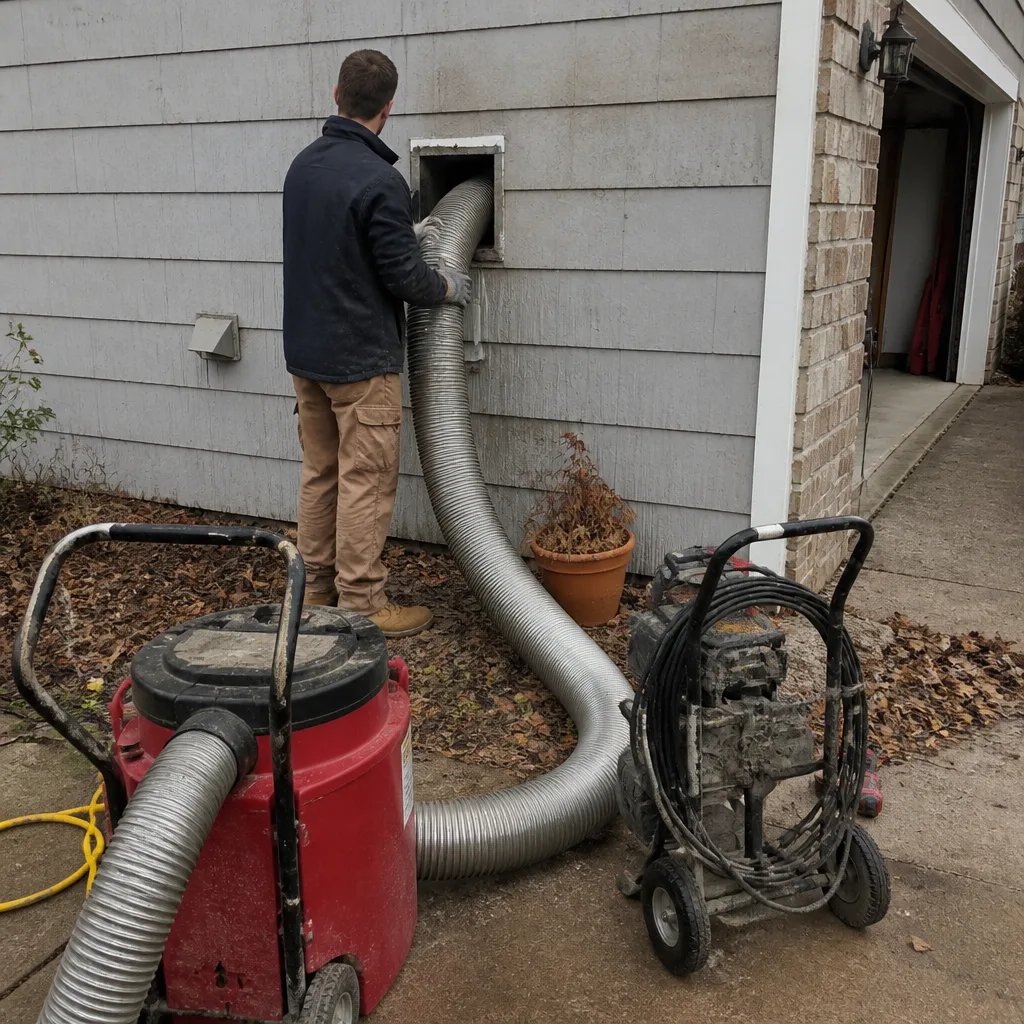 Before
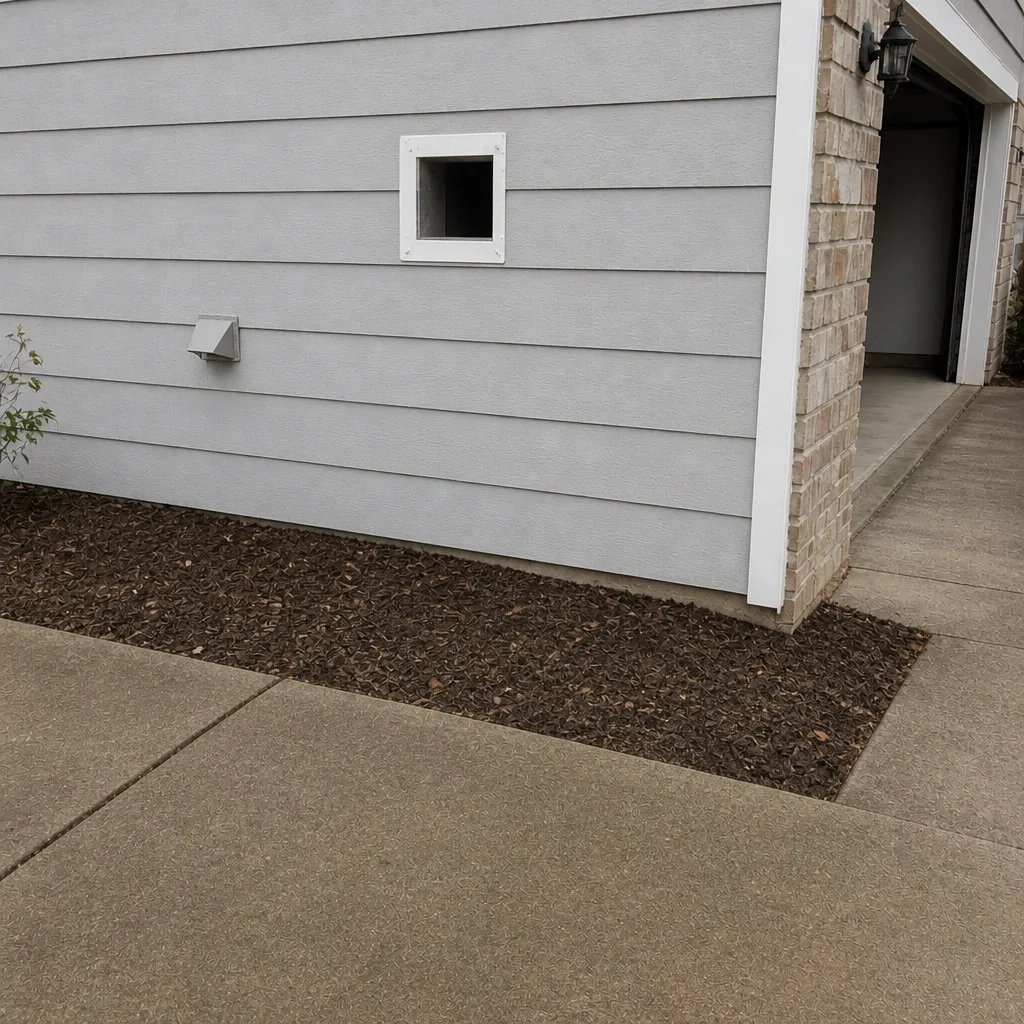 After
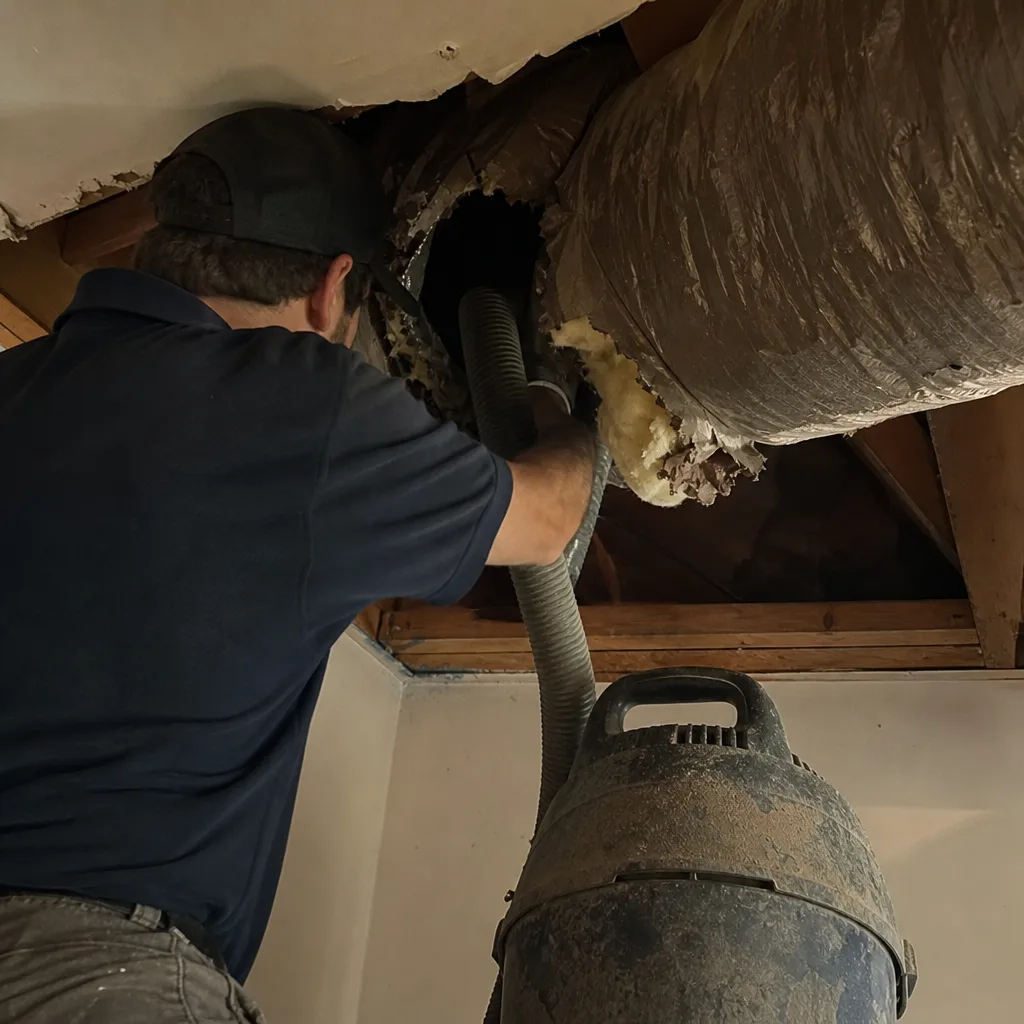 Before
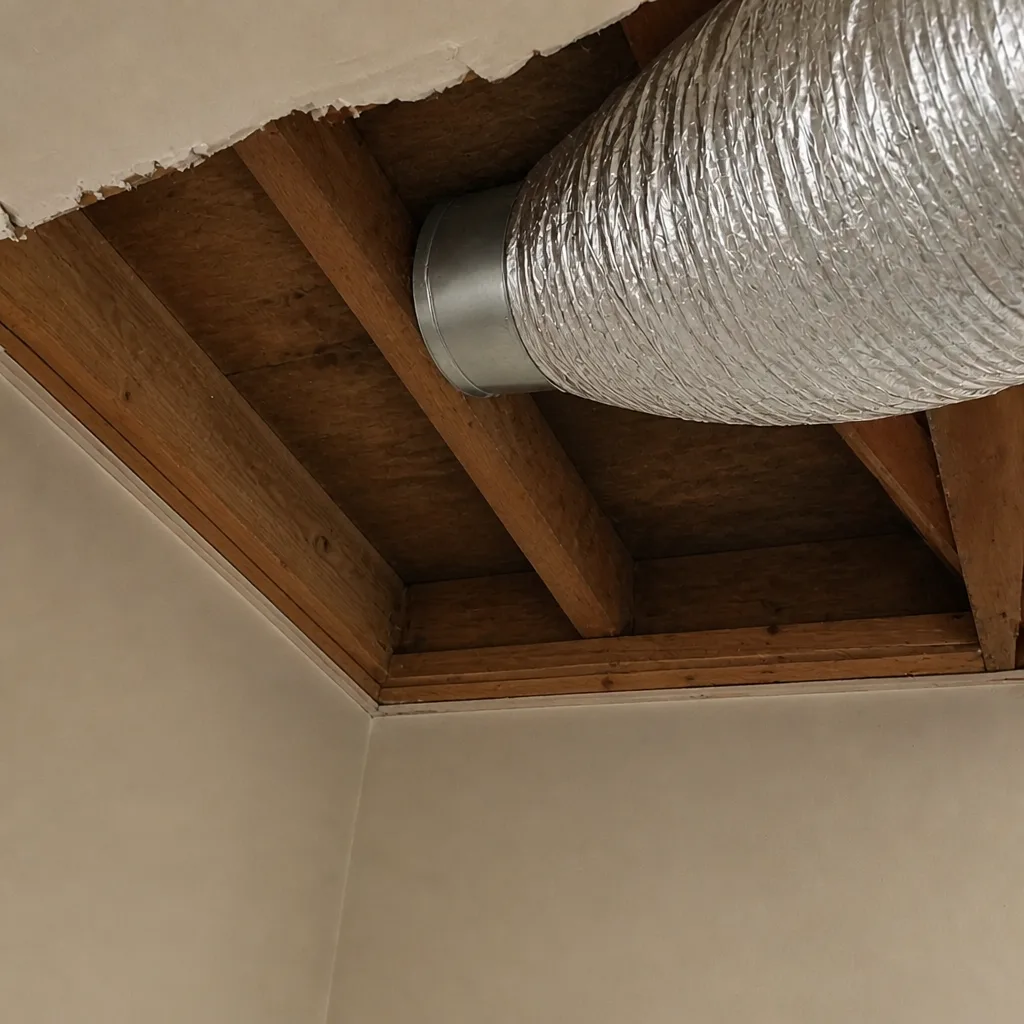 After
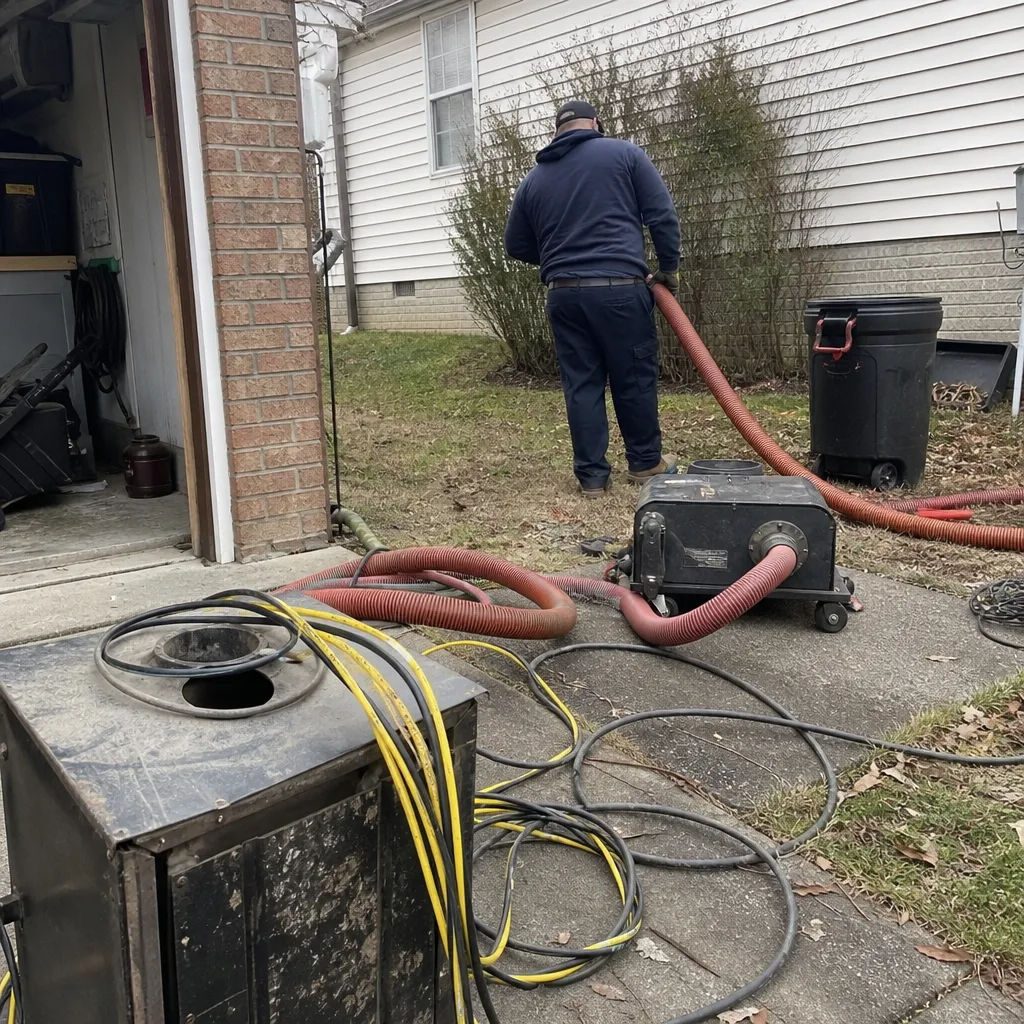 Before
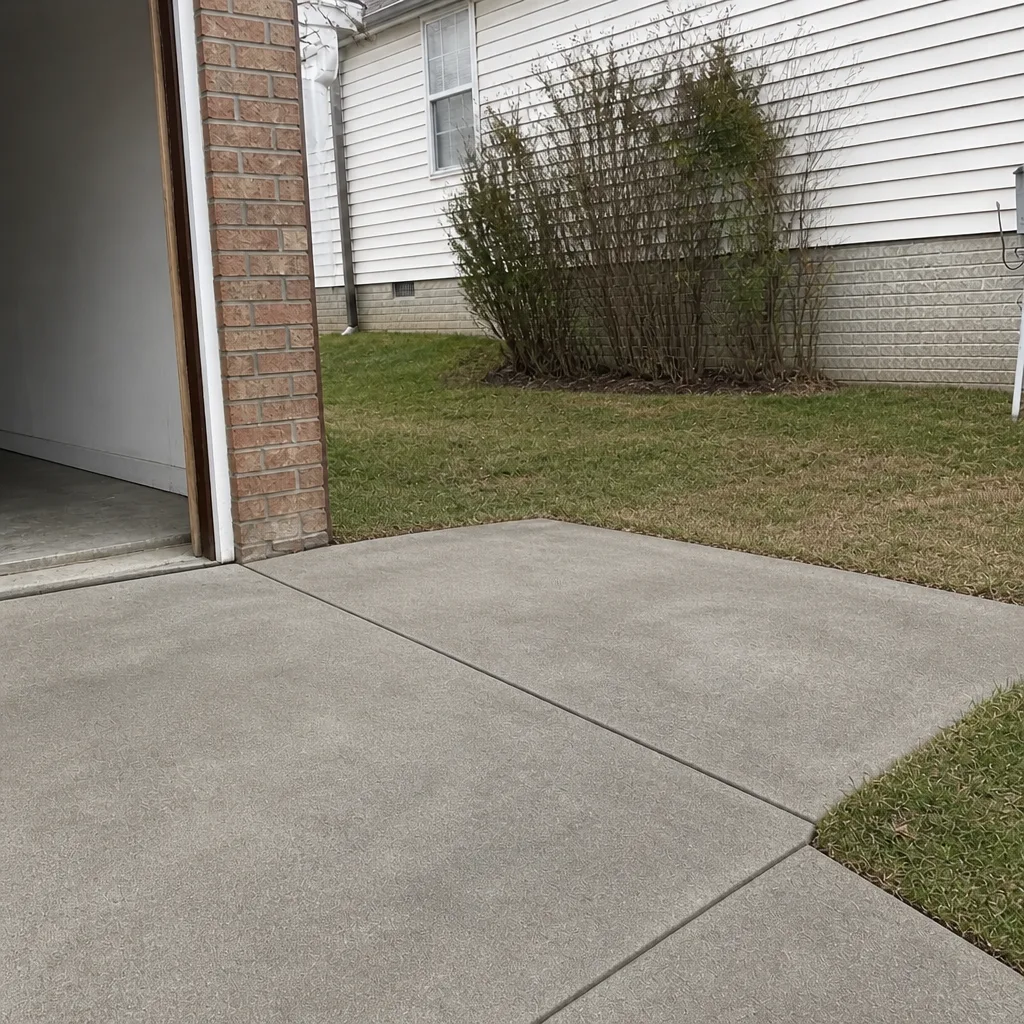 After
When to Call a Professional
Call a duct specialist when any of the following is true: water reached your air handler, crawlspace, or attic ductwork; there was a fire, smoke event, or sewage backup in the home; you’re about to start or finish a remediation project involving drywall, flooring, or insulation; you noticed a musty odor from vents after a water event; or an insurer has asked for a duct system assessment to settle a claim. Laurel Air Duct offers free estimates in Murfreesboro - call (888) 378-8438. We answer 24/7. Fast dispatch from 7am to 7pm, Sunday through Friday. Our technicians have up to 9 years of experience and use professional-grade equipment, not shop-vac shortcuts.
Frequently Asked Questions
No. Routine storms that don’t cause water intrusion, smoke, or structural damage don’t call for duct cleaning. Duct work becomes a real question when water reached the air handler or ducts, when the system ran during a wet event, or when smoke or construction dust got into the return air side. If none of those happened, a normal cleaning schedule is fine. Call (888) 378-8438 for an exact quote if you’re unsure which category your event falls into - estimates are free.
48 to 72 hours is the window if water reached the duct system, because mold and bacteria can start growing in that timeframe, especially in Murfreesboro’s humid climate. For clean-water intrusion that never touched the ducts, waiting until the home is fully dry is fine, but the system should still be inspected before you consider the event closed. Call (888) 378-8438 for an exact quote - estimates are free.
Often, yes, if the ducts were genuinely affected by the covered event and the damage is documented. Photos, moisture readings, and a written scope from a duct specialist are the file an adjuster needs. Coverage depends on the specific policy and how the damage gets classified. Getting the claim opened before the cleaning work starts is the practical move. Call (888) 378-8438 for an exact quote - estimates are free.
It depends on the material and how much of the system the sewage contacted. Metal ductwork can sometimes be cleaned and sanitized, but porous materials like flex duct with a fiberglass liner usually need to be removed and replaced. Sewage is category 3 water, meaning it’s treated as contaminated. A professional assessment is the only way to know which sections fall into which category. Call (888) 378-8438 for an exact quote - estimates are free.
Soot deposits on duct walls, and every time the system runs they stir up and recirculate. That smell is not going to fade on its own. Smoke damage usually requires agitation with a rotary brush and HEPA-contained extraction. Some sections may need replacement if the deposits have bonded to porous liner. Call (888) 378-8438 for an exact quote - estimates are free.
An inspection with a camera tells you what you can’t see from a register. Duct runs in a flooded crawlspace are often exposed even when the water level looks like it stayed low, because the insulation inside or around the duct absorbs moisture. If you’re in a Murfreesboro area that floods - anywhere near the Stones River or low-lying ground - get it checked before you assume it’s fine. Call (888) 378-8438 for an exact quote - estimates are free.
The Bottom Line
Emergency preparedness for your duct system comes down to matching the response to the event. Flooding near the air handler, sewage backup, fire, smoke, and post-remediation construction all warrant a professional inspection within 48 to 72 hours. Clean water that never reached the ductwork can wait. The distinction between contaminated and clean water changes the entire remediation path, and documentation protects your insurance claim in either case. The sequence matters too: dry first, build back second, clean the ducts third, then verify. Skipping that order wastes work. Laurel Air Duct handles cleaning, repair, and dryer vent safety as one specialist, with the professional-grade equipment contractors use. Call (888) 378-8438 to schedule a free estimate after any event that has you unsure. The written estimate sets the final price, and you’ll see the before-and-after photos before we leave.
Written by the team at Laurel Air Duct.