
Last updated November 16, 2026
 Whole-home duct cleaning
 Dryer vent cleaning
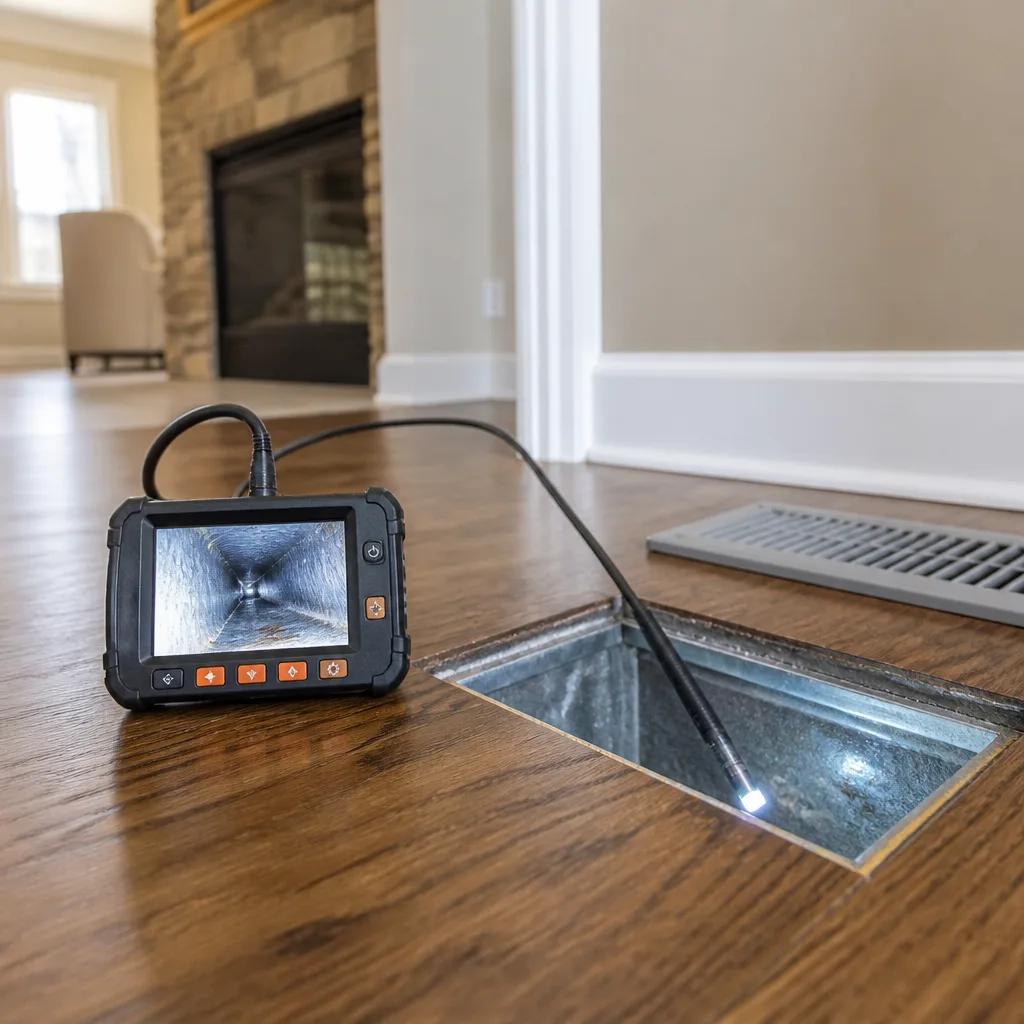 Camera inspection
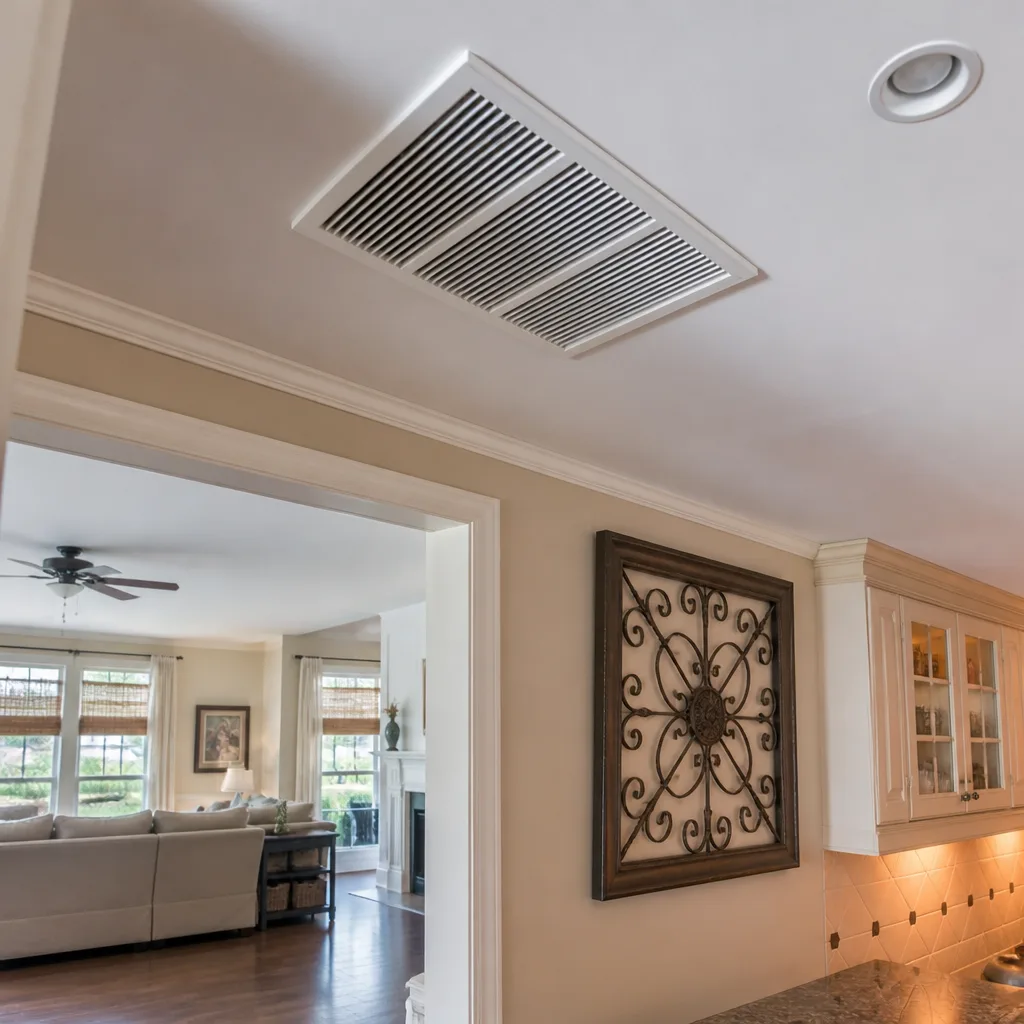 Sanitizing & deodorizing
Whole-system duct and dryer vent check with before-and-after photos - you see exactly what came out of your vents
That "$99 whole-house special" is a bait ad - the real number appears once they are in your hallway, or the "clean" is a shop-vac at the register. We photograph the inside of your ducts before and after instead.
Air Duct Cleaning Troubleshooting in Murfreesboro: Common Problems and How to Fix Them
If your ducts were “cleaned” six months ago and you’re still wiping dust off the same shelf every week, the cleaning didn’t necessarily fail. Something specific in your duct system did, and in most cases it’s identifiable. That’s the part of this topic most guides skip. They tell you to clean your ducts more often, or to buy a better filter, or to call someone immediately. None of that helps you figure out what’s actually wrong. This guide walks through the real complaints we hear about duct work in Murfreesboro, how a technician isolates the component responsible, and which problems you can check yourself before you spend anything. We’ll cover dust that won’t quit, odors that show up after cleaning, airflow that’s worse in one room, and the structural failures that produce all three.
Quick Answer
Most persistent duct problems in Murfreesboro trace back to one of four causes: gaps or disconnected sections in the ductwork letting attic or crawlspace air into the system, a cleaning job done without adequate negative pressure that left loosened debris behind, a supply-and-return imbalance rather than leftover dirt, or a collapsed or crushed flex duct run. Diagnosing which one you’re dealing with starts with where the symptom appears, not with guessing about air quality. A free estimate and a visual inspection will separate them quickly.
Styles & brands we work with
- Whole-home duct cleaning
- Dryer vent cleaning
- Camera inspection
- Sanitizing & deodorizing
Table of Contents
- Cleaning Failure vs. Duct Integrity Problem
- Why Dust Comes Back After Cleaning
- Musty Odor After Cleaning: What It Usually Means
- Uneven Airflow: Debris, Dampers or Imbalance?
- Murfreesboro Construction Patterns That Cause These Problems
- What You Can Check Yourself and What Needs Equipment
- A Step-by-Step Troubleshooting Process
- When the Fix Is Repair, Not More Cleaning
Cleaning Failure vs. Duct Integrity Problem
The first question to answer is whether the ducts were cleaned badly or whether they were fine and the duct system itself is broken. These are different problems with different fixes, and homeowners often assume the first when it’s the second. A cleaning removes what’s inside the ducts. It does nothing about a gap between two duct sections, a flex duct that has slipped off its collar, or a run that got crushed under flooring during a remodel.
Here’s how to tell them apart:
- Cleaning problem: dust returns gradually, over weeks or months, fairly evenly across the house. The registers look dusty inside. There’s no obvious draft at a specific spot.
- Integrity problem: dust or dirt is heaviest in one zone or one room. You may notice a temperature difference or a draft near an attic hatch or crawlspace access. There’s often a musty smell only in one area.
The reason this distinction matters in Murfreesboro is that the housing stock here includes a lot of home built during the 1990s and 2000s boom years, when flex duct was the default for attic runs. Flex duct is convenient and it works. But it can come loose at the connection points, sag under its own weight, or get pinched by a joist. When that happens, the system draws unconditioned air from the attic or crawlspace right along with the return air. That air carries insulation particles, dust and moisture. No amount of additional cleaning fixes it.
Our approach is to inspect the accessible runs before any cleaning starts. If we find disconnected flex, gaps at the plenum, or a crushed section, we tell you before the cleaning and quote the repair separately. Cleaning and repair belong together because cleaning without repair just clears the pipe and lets the same leak push dirt right back in. That’s why we offer air duct repair as a distinct service rather than pretending every call is a cleaning call. Disconnected flex and gaps are the most common integrity failures we see, and they’re also among the least expensive to fix when they’re found early.
Why Dust Comes Back After Cleaning
Dust coming back after a cleaning is the most common complaint we hear. The cause is almost never the cleaning itself. It’s one of three things: the source of the dust was never removed, the cleaning didn’t dislodge what was actually there, or the system is pulling in new dust from outside the ductwork. Let’s take them in order.
The source wasn’t removed. A cleaning removes debris from inside the ducts. It doesn’t stop dust from entering the system in the first place. If your return filter is collapsing, the filter rack has a gap, or the return plenum is open to an attic or basement, the system is taking in unfiltered air. Every hour the fan runs, it brings more dust in.
The cleaning didn’t dislodge what was there. Consumer-equipment jobs and some low-cost “blow-out” cleanings use shop-vac style vacuums and compressed air to loosen debris. That loosened debris has to go somewhere. If it isn’t captured under negative pressure, it drops into the ducts and settles again within weeks. This is the most common reason a duct cleaning “doesn’t stick.” The fix isn’t a second cleaning; it’s a cleaning done with real negative-air equipment and HEPA filtration, which is what our Rotobrush rotary-brush system and Nikro units are designed to deliver.
New dust is coming from the system envelope. This is the integrity problem from the previous section. If a duct run has a gap, the fan draws from the gap. Attic air comes in, and with it insulation particles and fine dust. You clean, and within weeks the same gap does the same thing.
The pattern is the tell. Dust returning slowly and evenly is usually a filter or source problem. Dust returning fast, in one zone, or across the whole house within days of a cleaning points to a pressure or integrity problem. If you’re seeing it, take a look at the air duct cleaning page for what a full-scope job actually includes, and compare it to what you received.
Musty Odor After Cleaning: What It Usually Means
A musty smell that appears after a duct cleaning is almost never mold the technician missed. It’s more often the result of inadequate negative pressure during the cleaning itself, or a pre-existing moisture problem the cleaning didn’t address. Here’s how that happens.
When duct cleaning stirs up debris, it has to be captured at the source. If the equipment doesn’t create enough negative pressure and route that air through HEPA filtration, particles drop out of the airstream and settle inside the ducts. If the ducts are also humid – which they are in a Murfreesboro attic from spring through fall – those particles can become a food source for microbial activity. The ducts smell musty because the cleanup left something behind in a damp environment.
This is why we run Abatement Technologies containment and HEPA filtration throughout every cleaning. The goal isn’t just to loosen debris. It’s to keep it out of the air and out of the ducts so it doesn’t settle back in and start this exact process.
There’s a second cause worth checking. A musty smell that appears in one room, not the whole house, is often a return air issue. If a return grille is drawing from a damp space – a basement, a sealed crawlspace, a utility closet – you’re going to smell that source. Cleaning won’t change it. The fix is identifying the return path and correcting it.
A smell that appears in every room uniformly, within days of cleaning, and doesn’t fade is the pattern that suggests the equipment wasn’t up to the job. Look at the tools used. Professional-tier equipment from Rotobrush and Nikro, used with containment, produces a different result than a shop vac and a wand. Laurel Air Duct uses contractor-grade equipment on every job, and we name the tools because we want you to ask this question. If a company can’t tell you what they’re running, you have your answer about the cleaning.
Uneven Airflow: Debris, Dampers or Imbalance?
Uneven airflow after a cleaning is rarely leftover debris. It’s usually one of three things: a supply-and-return imbalance, a damper that’s partially closed, or a flex duct run that’s crushed or kinked. Each has a different signature.
Imbalance shows up as some rooms getting too much air and others too little. The system is fine, the ductwork is intact, but the return isn’t sized or placed to serve the whole house. Adding a return, or adjusting a damper, changes the result. Cleaning doesn’t.
Damper position is the cheapest explanation to check. Dampers sit inside the branch ducts near the plenum or at each register in some installs. If a damper is partially closed, that room starves. If you’ve had any HVAC work done, a damper may have been left in the wrong position. Check the register louvers and the damper handles before anything else.
Crushed or kinked flex is the classic Murfreesboro crawlspace problem. Flex duct that’s been run through a tight space can be crushed by a person’s weight, a piece of stored equipment, or restoration work. A crushed run doesn’t deliver the air it’s supposed to, no matter how clean it is. It’s a repair, not a cleaning.
Here’s how to tell the difference:
- Is the weak airflow in a room the farthest from the air handler? That tends to point to imbalance or duct sizing.
- Is it in one room regardless of how long the system runs? That points to a crushed or disconnected run to that specific room.
- Did the problem start after a renovation? That’s most often flex duct that got disturbed during the work.
- Does the problem change when you open or close other vents? That’s a strong sign of a supply-and-return balance issue, not debris.
If you can answer these and the pattern points to a specific run, the next step is a visual inspection of that run. That’s what we do on a duct cleaning inspection before recommending anything, because recommending cleaning for a crushed duct is just a way to sell the wrong service.
Murfreesboro Construction Patterns That Cause These Problems
Duct problems follow local construction patterns. The homes here have a few characteristics that make certain failures more common than they’d be in a colder or newer market.
- Attic-based flex duct. Most of the homes built here in the 1990s and 2000s use flex duct in the attic. It’s efficient to install, but the long attic runs are vulnerable to sagging, pinching and disconnection. In a Tennessee summer, the attic temperature reaches well into the triple digits, and that heat stresses the duct connections over time.
- Crawlspace systems. Older Murfreesboro homes often route the return or part of the system through a sealed or vented crawlspace. That’s a moisture-rich environment. Any gap in a crawlspace duct pulls humid air into the system along with soil and debris. This is the most common source of musty smells that appear in one part of the house.
- Humid summers. Murfreesboro’s climate is humid, and that affects ducting in two ways. It accelerates the settling of debris that’s been loosened but not captured, and it makes any moisture intrusion more consequential. Debris in dry air is just dust; debris in humid air in a warm attic is a different situation entirely.
- Older homes with retrofitted systems. Retrofits often add a return grille in a central hallway or near a kitchen, which pulls unconditioned air or cooking exhaust back into the system. The cleaning is fine; the return placement is the issue.
None of these are unique to any one home, and none of them indicate a problem with a specific builder. They’re just the local patterns that show up. Knowing what patterns are common here is why we spend the first part of any visit checking the accessible ductwork rather than assuming a cleaning is the answer. We’re glad to talk through what’s typical in your neighborhood – whether that’s in the older homes near the square, the newer developments off the highway, or anywhere else in the Murfreesboro area.
What You Can Check Yourself and What Needs Equipment
Some duct problems have a clear symptom a homeowner can check. Others need equipment. Knowing the difference saves you a call you didn’t need and gets you to a technician faster when you do.
Checks you can do yourself:
- Inspect the registers. Remove a floor or ceiling grille with a screwdriver and look inside with a flashlight. If you see a thick buildup of dust on the duct interior walls, the ducts need cleaning. If you see a gap where the flex duct meets the boot or collar, that’s a repair. If you see dark staining or moisture, stop and call a professional.
- Check the filter. A filter that’s collapsed in the rack, bent, or misaligned in the filter slot is letting unfiltered air past. Look at the frame and the gasket; a filter that’s been sucked flat is obvious.
- Check the registers for airflow. A piece of tissue over the grille will tell you if there’s air moving. If one register blows cold and another barely blows at all, you have a pattern.
- Check damper positions. Many registers have a small lever on the grille. If a lever is in the closed or partially closed position, that room starves. Confirm with the register and not just the thermostat.
- Look at attic or crawlspace duct runs. A flashlight on the accessible flex runs will show you a collapse or a disconnected end. You don’t need to touch it to see it, and you shouldn’t touch anything that might be connected to the equipment.
Checks that need professional equipment:
- Static pressure testing to confirm whether the system is balanced.
- Negative-air verification during a cleaning, which requires a calibrated setup.
- Locating hidden disconnections behind drywall or inside sealed chases.
- Any check inside a supply or return plenum that could expose you to energized electrical parts or refrigerant lines.
One safety note: don’t remove a plenum cover or open an electrical panel to check a duct connection. Those areas carry high-voltage components and refrigerant under pressure. A trained technician should be the one to go inside the equipment; the register-level checks are the ones a homeowner can safely do.
A Step-by-Step Troubleshooting Process
When we visit a Murfreesboro home with a duct complaint, the process follows a consistent order. It’s the same order you can use to reason through the problem yourself.
- Ask when the problem started. If it’s been there since you moved in, it’s a design or integrity issue. If it appeared after a cleaning, a renovation or a season change, that gives us a timeline.
- Check the filter and filter rack. A collapsed or incorrect filter is the most common source of returning dust, and it’s the cheapest fix.
- Inspect the visible registers for buildup and gaps. This tells us whether the problem is dirt or a leak.
- Inspect the accessible flex runs in the attic or crawlspace. Disconnection, crushing, and sagging are visible. So is moisture staining.
- Check the return path. A return that draws from a crawlspace or an unconditioned utility closet is a common source of odors and imbalance.
- Check damper positions at each register. A partially closed damper explains a lot of airflow complaints and takes two minutes to correct.
- Compare what we found to what the symptoms say. If the pattern matches one component, we fix that. If it doesn’t, we look further. We don’t recommend a full cleaning when the answer is a single disconnected run or a crushed section.
The point of following the same order every time is that it catches the cheap fixes before anyone recommends the expensive ones. That’s the practical difference between a specialist and a generalist. A duct cleaning specialist brings the vacuum; a duct-system specialist asks whether the vacuum is even the right tool before starting it up. Our technicians have up to 9 years of experience, and the diagnostic order comes from years of seeing these patterns.
When the Fix Is Repair, Not More Cleaning
There’s a specific set of symptoms that point to a repair rather than a cleaning. If you recognize them, don’t schedule a second cleaning.
- A visible gap or disconnected duct end at a register boot, plenum or trunk connection.
- Dust returning within days of a professional cleaning, especially in one zone.
- A musty smell that’s worse in one room and doesn’t respond to cleaning.
- Airflow in one run that’s consistently weak after register and damper checks.
- Visible collapse, crushing or kinking of a flex run in the attic or crawlspace.
These are structural problems. Cleaning a leaky duct is like wiping a counter with a hole in the bottom of the cabinet; the same dirt gets spread again tomorrow. Repair caps the leak, reseals the connection, or replaces the damaged section, and then the cleaning actually holds. We treat air duct repair as a core service for exactly this reason, not as an upsell.
If you’re a property manager with multiple units in Murfreesboro, the diagnosis matters even more. A building with a shared or repeated design pattern will often have the same failure across multiple units, and a repair-first approach is both cheaper and more durable than repeated cleanings. We work with property managers to sort the pattern once and fix it consistently.
Common Mistakes to Avoid
- Assuming a second cleaning will fix dust that came back. It won’t, if the original problem was a leak or a disconnected run. If dust returns within days, the problem is structural, and a second cleaning just pays for the same result again.
- Choosing the cheapest quote without asking what equipment it includes. A quote built around shop-vac-style equipment and compressed air loosens debris without capturing it. The price looks lower because the process is smaller, not because you’re getting a deal.
- Skipping the repair after a cleaning. If we find a disconnected flex run and the homeowner cleans it anyway, the same leak returns. Fix it once. It’s a repair, not an honest cleaning outcome.
- Ignoring a filter that’s collapsing in the rack. A paper filter that bends or gets sucked flat under fan pressure is letting unfiltered air through. It’s a cheap check that gets overlooked.
- Missing a return that draws from a crawlspace or utility closet. A return in a damp space produces a musty smell in the whole house. It’s the return path, not the duct cleaning, and no cleaning job will fix it.
- Skipping the outside of the equation: the filter brand. Honeywell and Aprilaire filters are built to hold their shape under fan pressure. A filter that doesn’t hold its shape doesn’t filter. We carry these because a proper filter is part of a proper cleaning outcome, not an afterthought.
- Confusing a dryer vent issue with an air duct issue. Dryer vent problems are a separate diagnostic. A clogged dryer vent is a fire-safety issue, not an airflow issue in the HVAC system, and it should be handled as its own service. We treat dryer vent cleaning accordingly.
See the difference
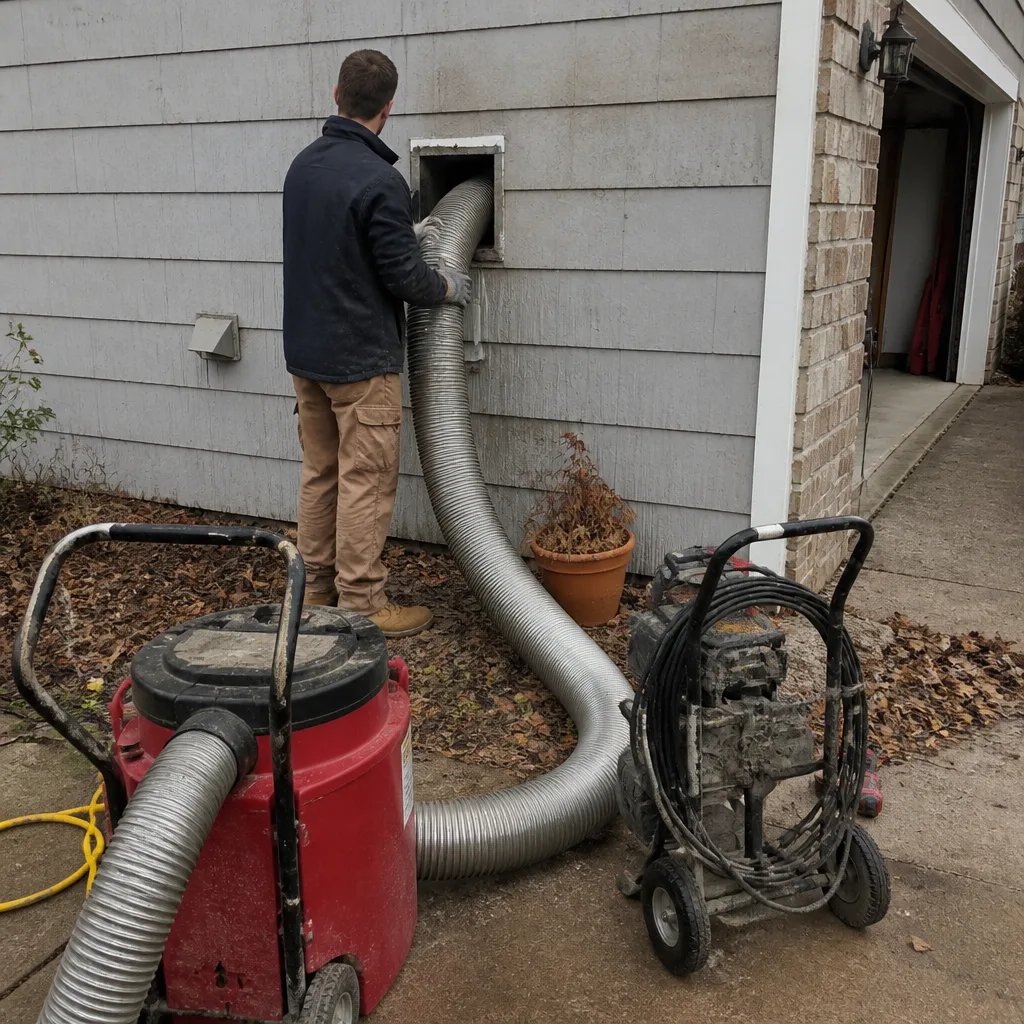 Before
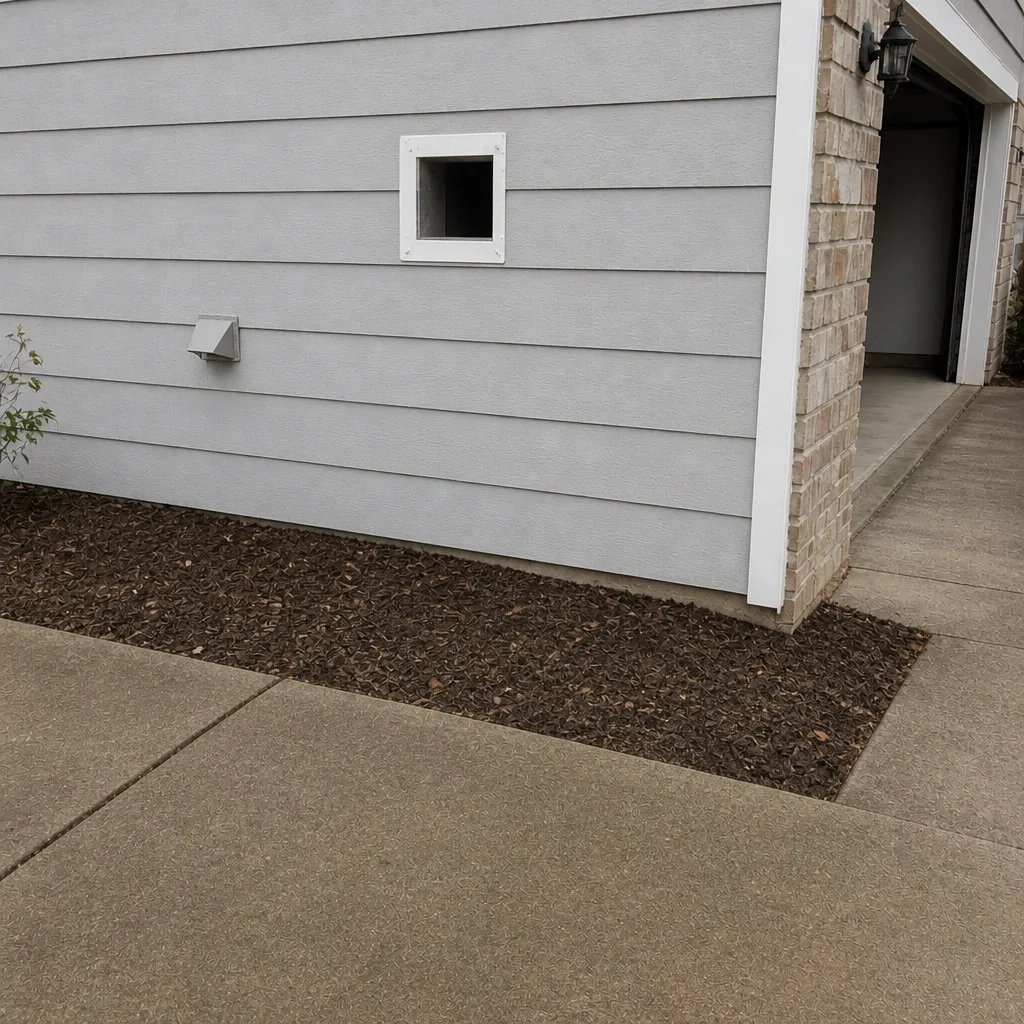 After
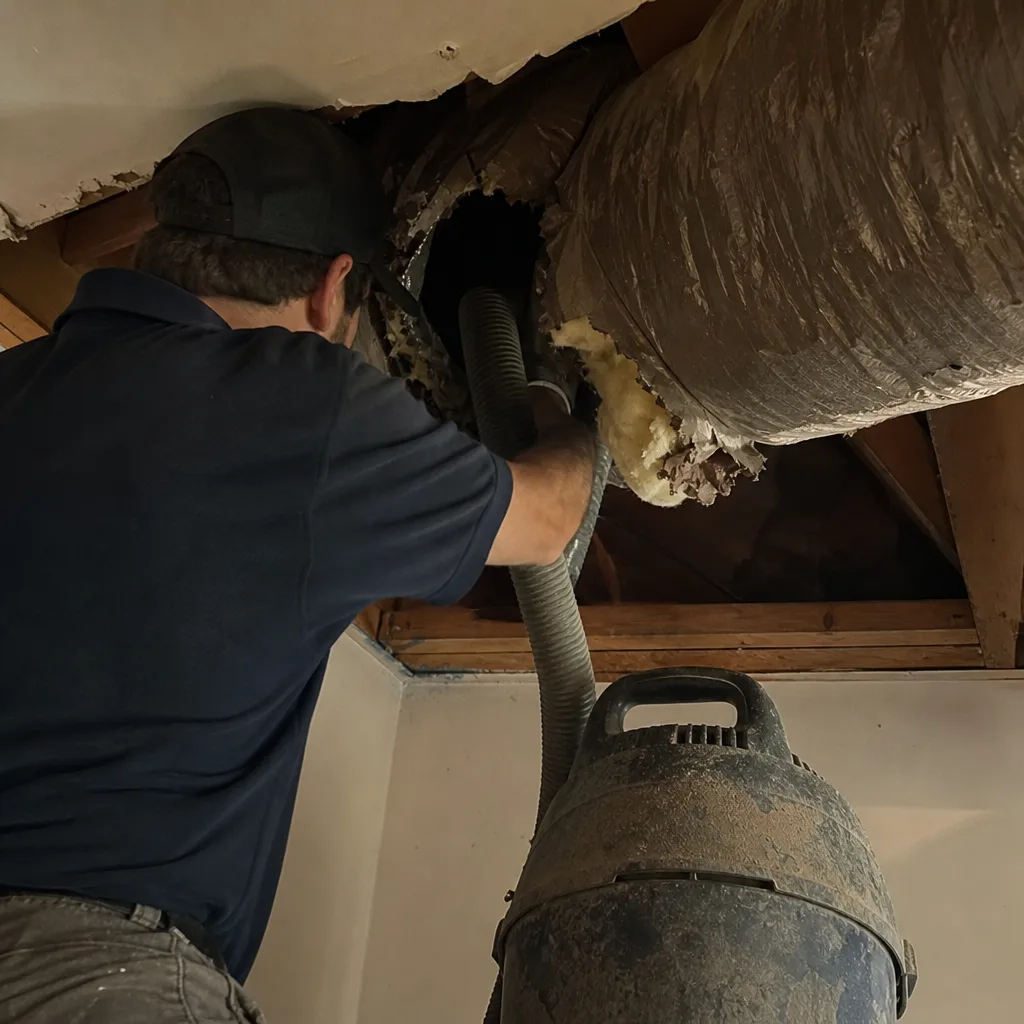 Before
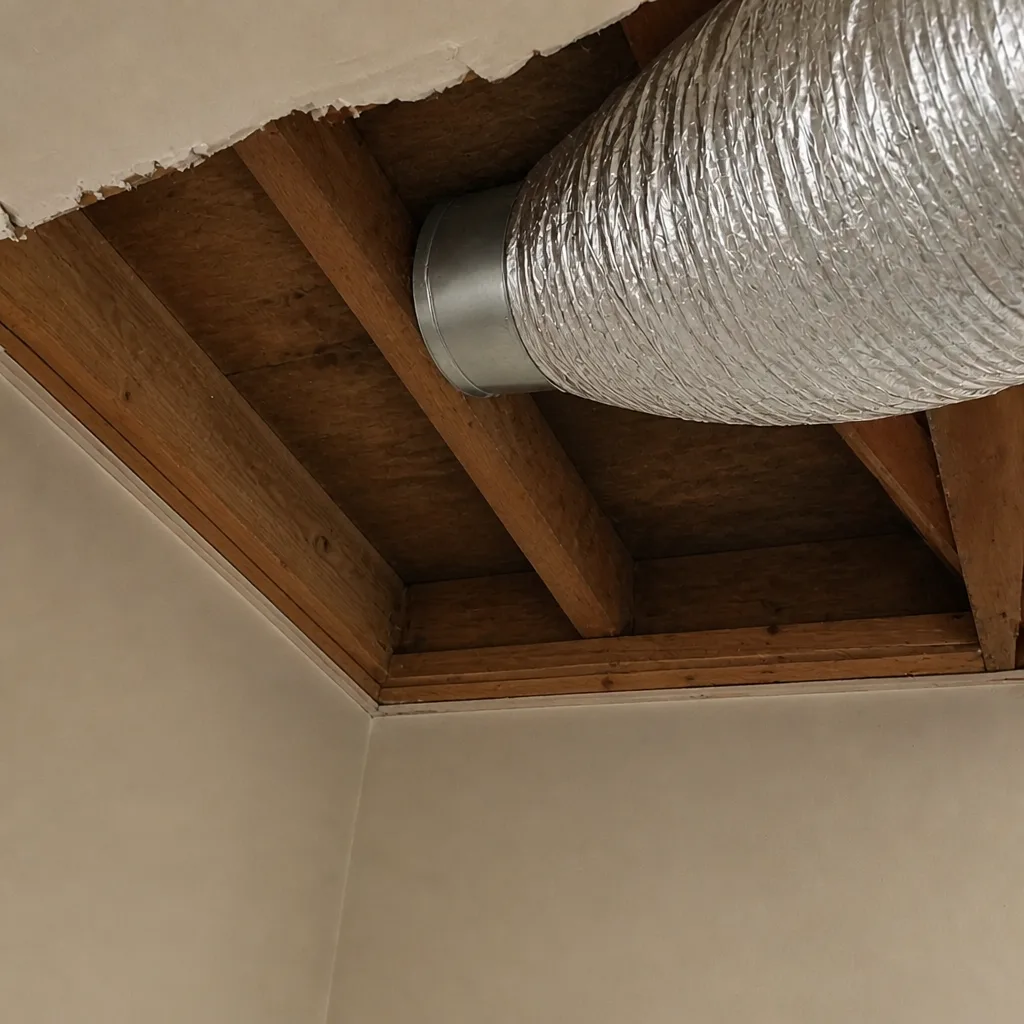 After
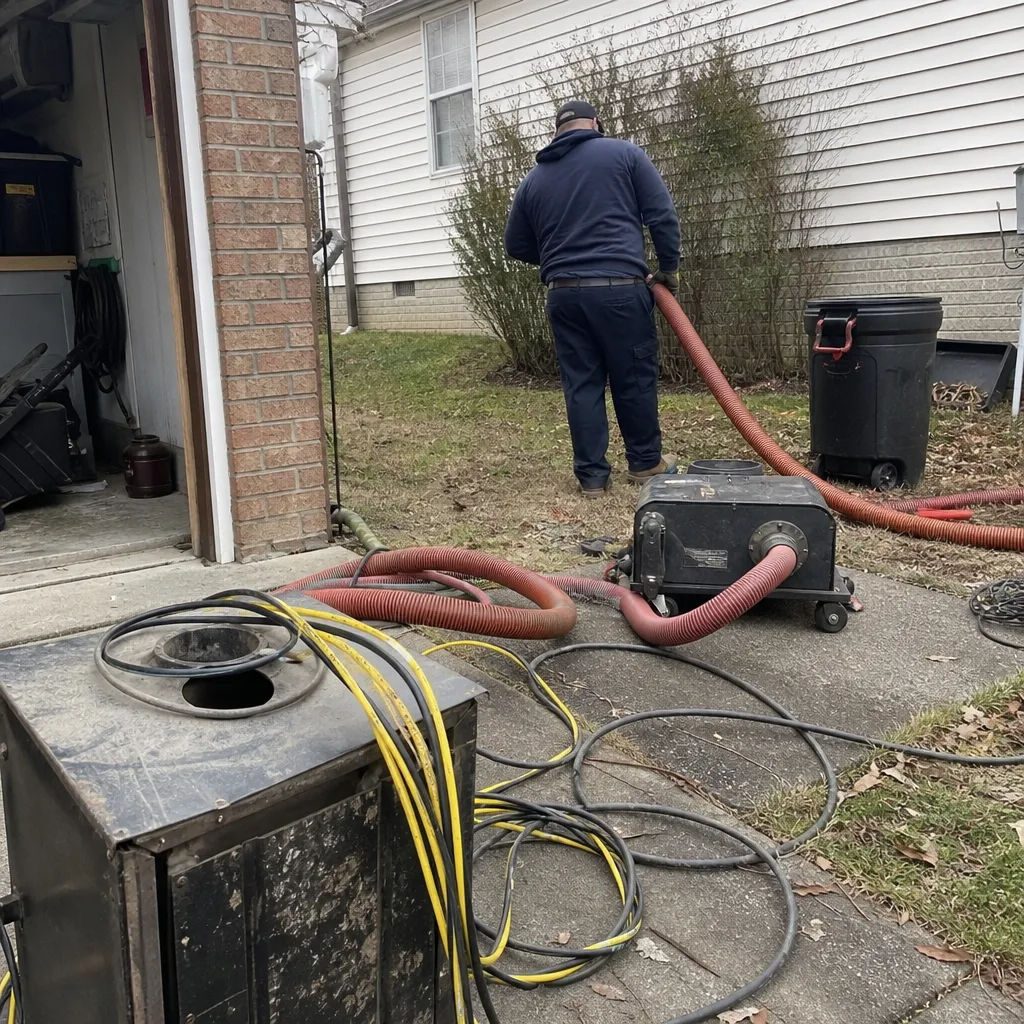 Before
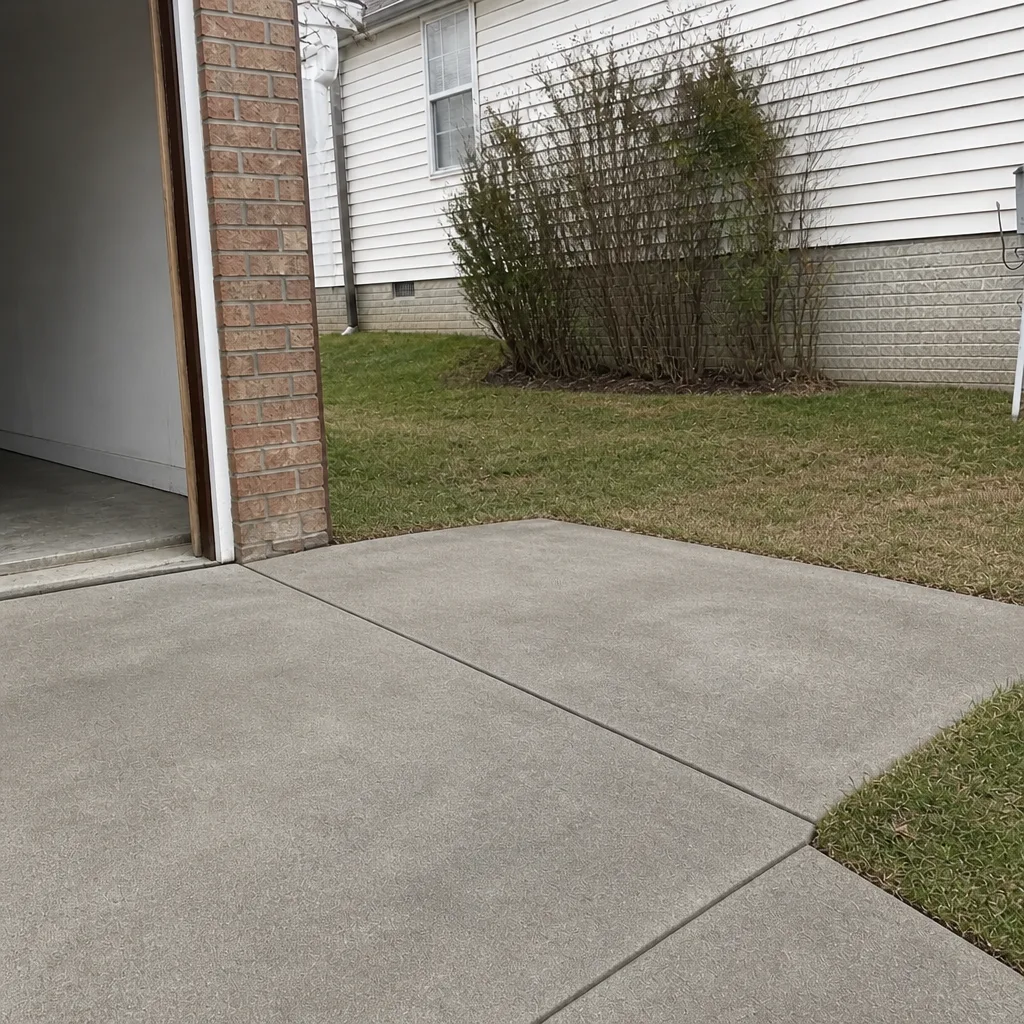 After
When to Call a Professional
Call a professional if you’ve inspected the registers and found a visible gap, disconnected flex, or a crushed run. Call if dust returns within days of cleaning. Call if you smell a musty odor that’s worse in one room and doesn’t fade. Call if airflow in one room is consistently weak after you’ve checked the registers and dampers. Call if you see staining or moisture inside a supply duct, and don’t open anything to investigate further. Call if you’re a property manager who needs a pattern diagnosed across multiple units. And call if you just want a straight answer on whether a cleaning is even the right service for what you’re experiencing. Laurel Air Duct offers free estimates in Murfreesboro – call (888) 378-8438. We answer 24/7. Fast dispatch from 7am to 7pm, Sunday through Friday. Estimates are free and the price is set per job by the written estimate, so there’s no mystery about the cost before we start.
Frequently Asked Questions
A typical whole-system air duct cleaning for a Murfreesboro home ranges from about $350 to $700, depending on square footage, number of registers, and how accessible the ductwork is. If repair work is needed – disconnected flex, crushed runs, or a resealed plenum – that’s quoted separately before the work starts. The written estimate sets the final price, and we don’t quote per-vent prices or coupon figures, because those numbers rarely hold once the technician is in the home. Call (888) 378-8438 for an exact quote – estimates are free.
Cheap quotes usually reflect a smaller process, not a better price. A quote built around shop-vac equipment and a wand loosens debris without capturing it, so the job is cheaper to run and the result doesn’t hold. A real cleaning uses contractor-grade negative-air equipment and HEPA filtration, which costs more to deploy because it’s designed to actually capture what’s loosened. That’s the reason to ask what tools a company uses before you book, not just what they charge. Call (888) 378-8438 to talk through what a full-scope cleaning in Murfreesboro involves.
Ask for before-and-after photos of your own ducts, not stock images, and a walkthrough of what was cleaned. A real cleaning pulls visible debris from the trunks, branches and registers, and the photos should show that. If a company can’t show you what came out of your system, ask why. Our technicians document the work they do, and we’re glad to walk a homeowner through it after the cleaning.
Most Murfreesboro homes don’t need duct cleaning on a fixed schedule. The realistic triggers are a renovation that generated dust, a new-to-you home with unknown history, a visible buildup at the registers, or a repair that requires the system to be cleaned after the fix. If dust returns quickly after a cleaning, don’t clean again – fix the leak or disconnection first. Call (888) 378-8438 and we’ll give you a straight answer on whether cleaning is the right next step.
Usually not. Uneven airflow is typically a damper position, a supply-and-return imbalance, or a crushed flex duct run, and none of those are fixed by cleaning. Cleaning removes debris; it doesn’t rebalance the system. The way to tell the difference is to check the register dampers first, then have the duct runs inspected. If the runs are intact, the answer is likely an airflow or return-path adjustment, not a cleaning. Call (888) 378-8438 for a free estimate and we’ll diagnose before we recommend.
Not automatically. A musty smell after cleaning is more often the result of inadequate negative pressure during the cleaning itself, which leaves loosened particles in a humid duct, or a return that’s drawing from a damp crawlspace or utility closet. Neither is solved by treating it as a mold issue. The fix is a cleaning done under proper HEPA containment, or a correction to the return path. We route the problem before recommending anything, and a free estimate in Murfreesboro is the place to start. Call (888) 378-8438. We answer 24/7.
The Bottom Line
Most duct complaints in Murfreesboro aren’t mysterious. They’re traceable to a handful of causes: gaps and disconnected flex runs pulling attic or crawlspace air into the system, cleanings done without proper negative pressure, supply-and-return imbalance, and crushed flex duct from crawlspace or renovation work. The order of diagnosis matters. Check the filter, the registers, the visible runs and the return path before you spend money on a second cleaning. If the pattern points to structural damage, the answer is a repair. If it points to a cleaning shortfall, the answer is a cleaning done with contractor-grade equipment and HEPA containment. We name the tools – Rotobrush, Nikro, Abatement Technologies – because you should be able to ask what’s being used. One specialist for cleaning, repair and dryer vent safety. If you’re near Nolensville or anywhere in the Murfreesboro area, we’re glad to help you sort out what’s actually going on.
Call (888) 378-8438 for a free estimate. We answer 24/7. Fast dispatch from 7am to 7pm, Sunday through Friday. We clean it. If it’s broken, we fix it.
Written by the team at Laurel Air Duct.